Disclosure: As an Amazon Associate, Sandy Music Lab earns from qualifying purchases.
The ambient worship guitar sound comes from three things: volume swells that remove the pick attack, a delay that repeats each note, and a long reverb that blends it all into a pad. Place the volume pedal before delay and reverb, swell in just after you pick, and keep your chords simple.
🎸 Free download
Not sure which guitar is right for you?
Get the free Guitar Gear Cheat Sheet: match your style, budget and hands to the right guitar in 2 minutes. You’ll also get my 30-Day Practice Plan as a bonus.
Send My Cheat Sheet →This tutorial is part of our worship guitar guide. If you haven’t built your rig yet, start with the worship pedalboard setup guide, then come back here for the playing technique. You’ll use the same worship guitar chord shapes for pads that you use for strumming.
A good worship guitar sound is less about one magic pedal and more about how you play. Ambient guitar fills the space between vocals and keys, creates movement in quiet moments, and swells under the band in big choruses. Done well, the congregation may not notice the guitar at all; they just feel the room open up. Done badly, it turns into a wash that hides the melody. This guide shows you how to stay on the right side of that line.
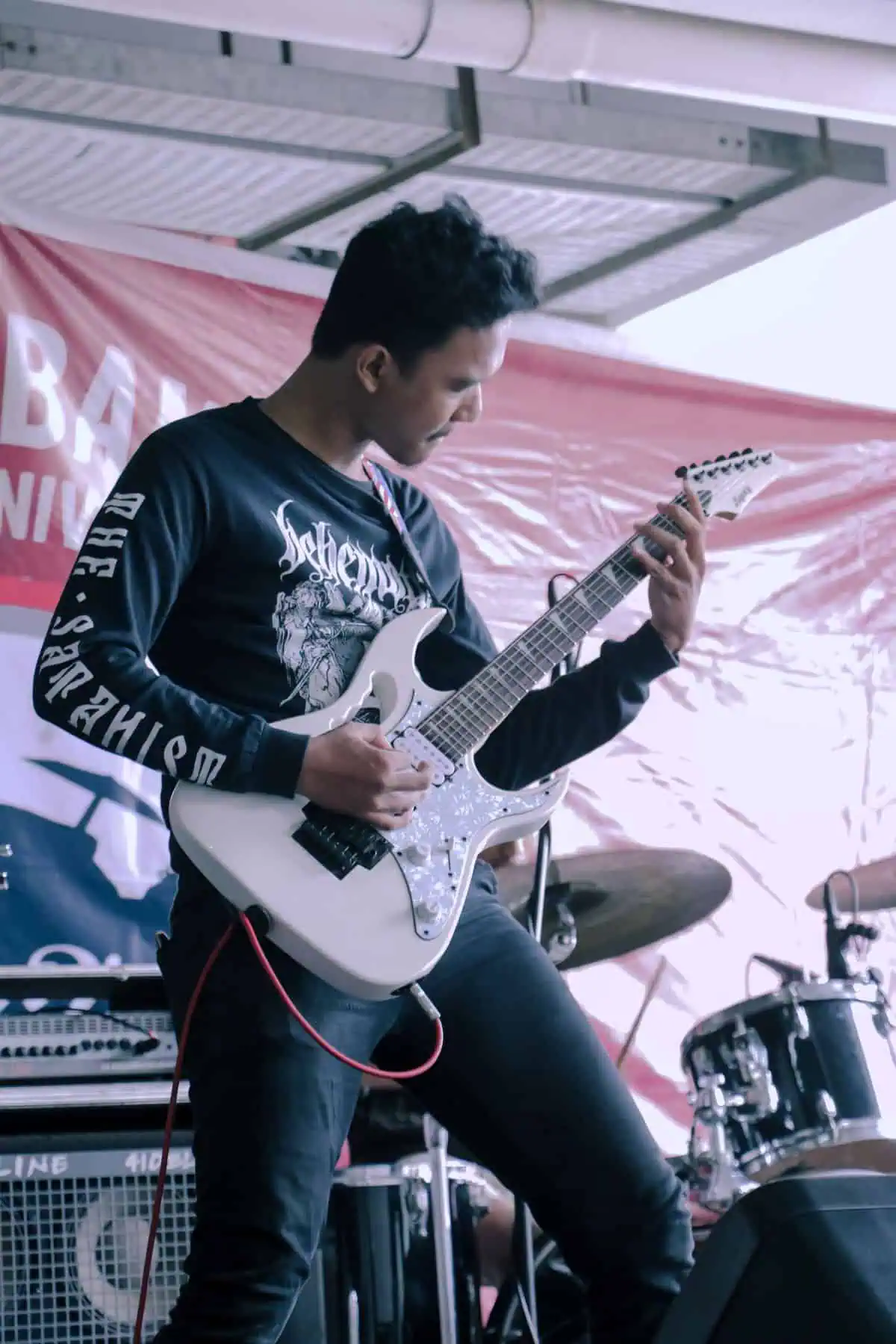
What Is the Ambient Worship Guitar Sound?
The worship guitar sound is a style of playing that treats the electric guitar more like a synth pad than a strummed instrument. Instead of short, percussive notes, you play long, soft-edged sounds that rise and fade. The main tools are:
- Swells: notes and chords that fade in without the pick attack, using a volume pedal or the guitar’s volume knob.
- Delay: repeats that extend each note and fill rhythmic space.
- Reverb: a sense of space; long decays turn single notes into pads.
- Modulation (optional): subtle chorus, vibrato or shimmer for movement.
In a typical worship set, this worship guitar sound shows up in intros, in transitions between songs, under prayer or spoken moments, and as a background layer in choruses while acoustic guitar handles the rhythm.
To lock your dotted-eighth delay to the song, use our free delay time calculator: tap the tempo and read off the milliseconds. Most worship songs sit around 72 BPM, where a dotted-eighth delay is 625 ms; see our worship song tempo study.
How Do You Do Volume Swells on Guitar?
Volume swells are the core technique. The goal is to hear the note bloom in without the click of the pick. Here’s how to practise them.
- Start with the volume pedal heel-down (silent) or your guitar’s volume knob at zero.
- Pick a chord or single note.
- Immediately after the pick strikes, roll the volume up. Too early and you hear the attack; too late and you lose most of the note’s sustain.
- Bring the volume up over about one or two beats, timed so the note reaches full level on the downbeat.
- Fade back down before the next swell, or let delay and reverb carry the tail while you prepare the next chord.