Disclosure: As an Amazon Associate, Sandy Music Lab earns from qualifying purchases.
In a worship band, the electric guitar usually plays one of three roles: ambient pads that fill space, rhythmic parts such as dotted-eighth delay lines, or melodic lead lines that echo the vocal. The key skill is choosing parts that support the singers and leave room for the acoustic guitar and keys.
🎸 Free download
Not sure which guitar is right for you?
Get the free Guitar Gear Cheat Sheet: match your style, budget and hands to the right guitar in 2 minutes. You’ll also get my 30-Day Practice Plan as a bonus.
Send My Cheat Sheet →This guide is part of our worship guitar guide, the hub for every church guitar topic. For the effects behind these parts, see worship pedalboard setup and how to get the ambient worship guitar sound. For the chord shapes you’ll use, see worship guitar chords.
Playing worship electric guitar is a different job from playing lead in a rock band. You’re rarely the centre of attention. Instead, you’re adding colour, energy and memorable hooks while a congregation sings. The best worship electric guitarists are great listeners: they know when a simple two-note line will lift a chorus, when a swell will carry a transition, and when to stop playing entirely.
What Does an Electric Guitarist Do in a Worship Band?
| Role | What you play | When it works | Tone |
|---|---|---|---|
| Ambient/pad | Volume swells, long sustained notes | Intros, verses, transitions, prayer | Clean or light drive; long reverb and delay |
| Rhythmic delay | Eighth-note picking with dotted-eighth delay | Mid-tempo verses and choruses | Clean to light drive; synced delay |
| Lead/melodic | Hooks, intro riffs, melody echoes | Intros, instrumentals, between vocal lines | Medium drive; delay |
| Rhythm | Partial chords, muted eighth notes, power chords | Up-tempo songs, big choruses | Medium drive |
| Texture | High voicings, octaves, tremolo | Building sections | Varied |
In a band with two electric guitarists, players often split these roles: one handles pads and texture, the other handles lead lines and rhythmic parts. If you’re the only electric player, you’ll move between roles throughout a song.
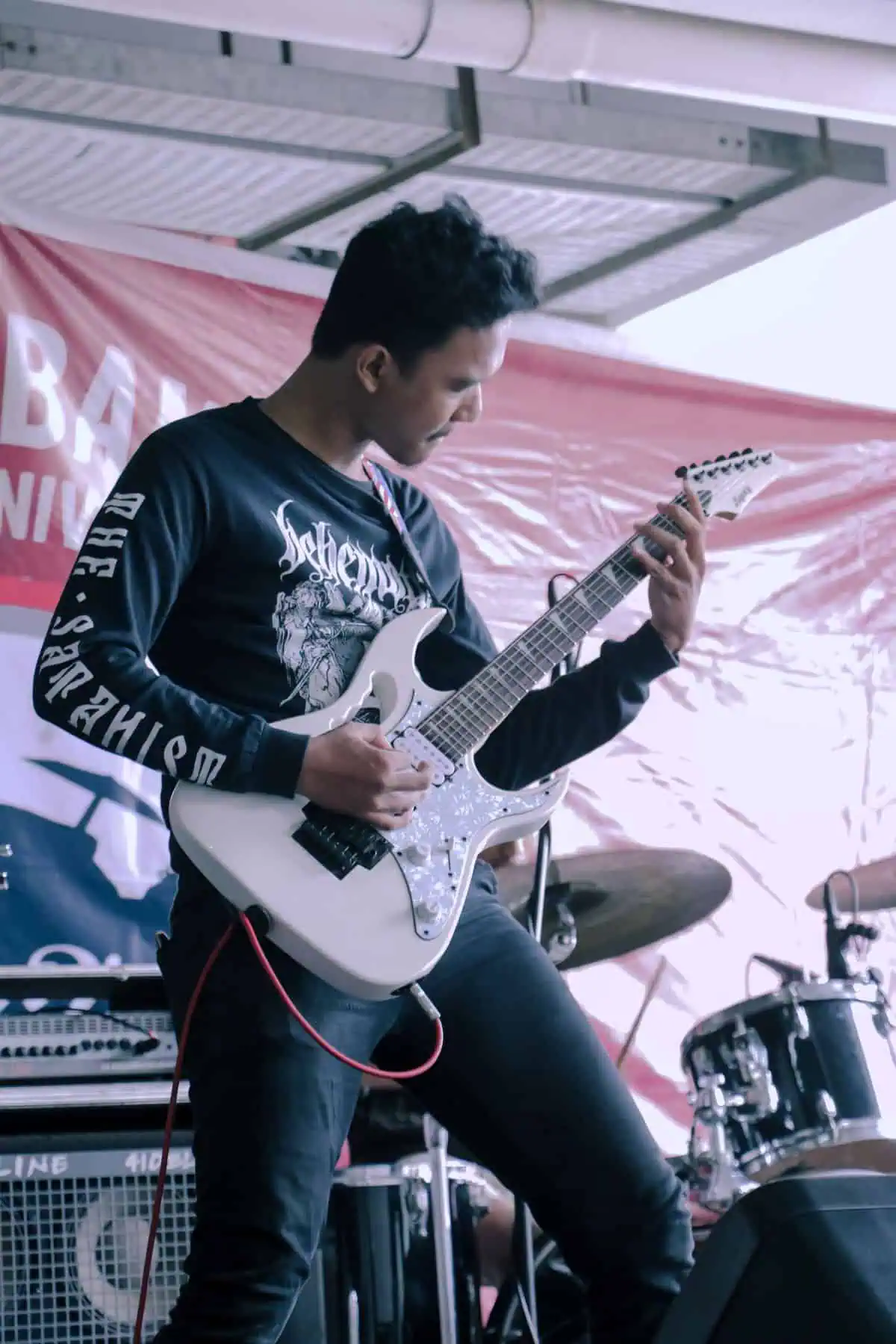
Worship Lead Guitar Parts: How to Play Them
1. Learn the recording’s signature lines
Many worship songs have a recognisable guitar hook in the intro or between choruses. Learning it helps the congregation recognise the song. Simplify if needed, but keep the melody’s shape.
2. Echo the vocal melody
A tasteful lead line often borrows a few notes from the vocal melody and plays them between phrases, never over the singer. Leave the space while words are being sung.
3. Use the major pentatonic and chord tones
Most worship songs are in major keys, so the major pentatonic scale and the notes of each chord are your best friends. Target chord tones (the root, third and fifth) on strong beats. For a deeper look at building lead skills, see how to get better at lead guitar.
4. Play high and light
The acoustic guitar, keys and bass already cover the lower and middle ranges. Playing above the 7th fret, or on the top three strings, keeps your parts clear.
5. Think in phrases, not solos
Most worship songs don’t feature guitar solos. When there is an instrumental, play a short, memorable melody rather than a fast run.