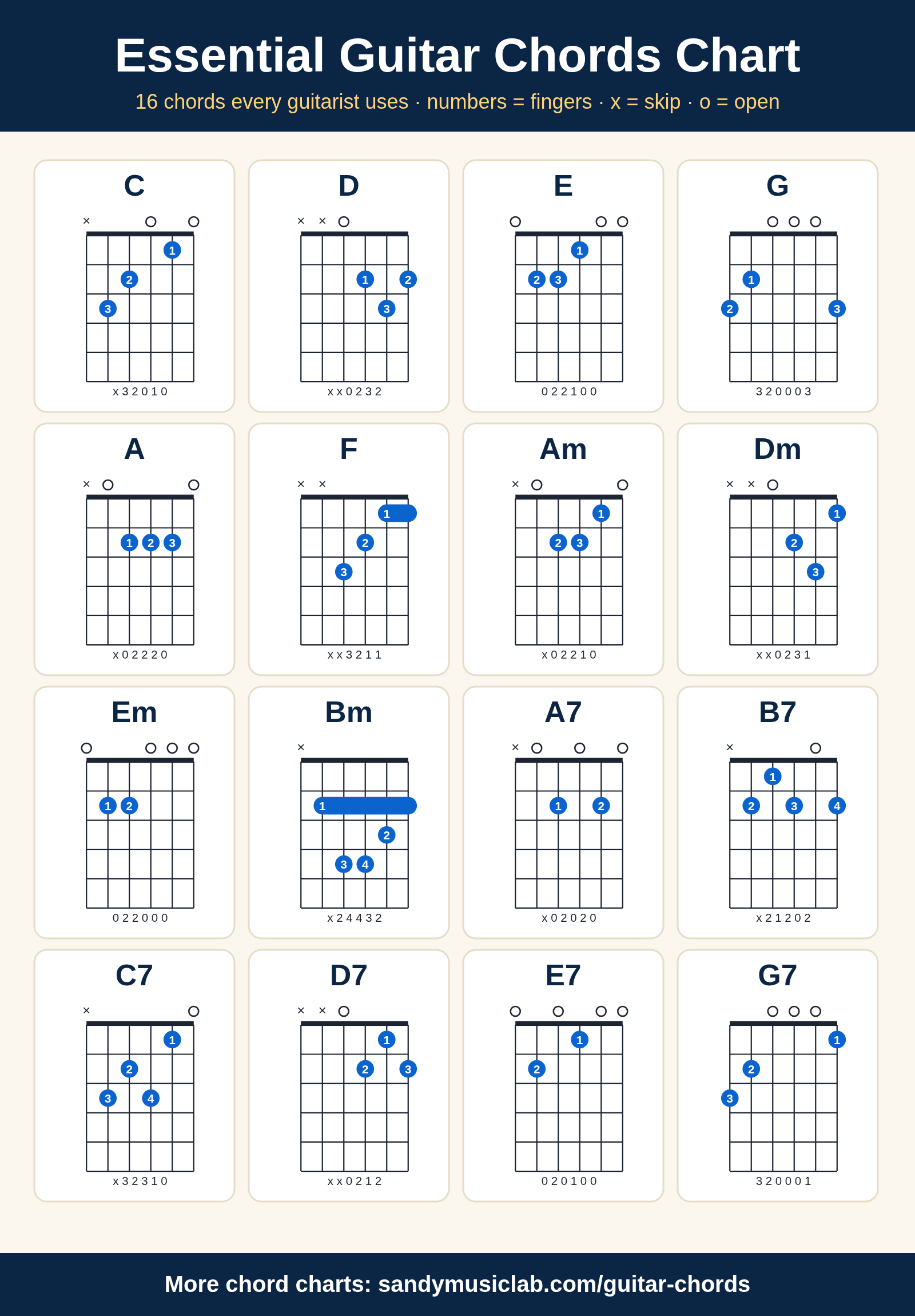
How to use these infographics
- Print: download the PNG. Each infographic is 2400 px wide, so it prints sharp on letter or A4 paper.
- Practice: save the image to your phone and keep it on your music stand or pedalboard.
- Share: teachers, bloggers and worship teams can embed any infographic with the code under it. The code includes a credit link.
Where the numbers come from
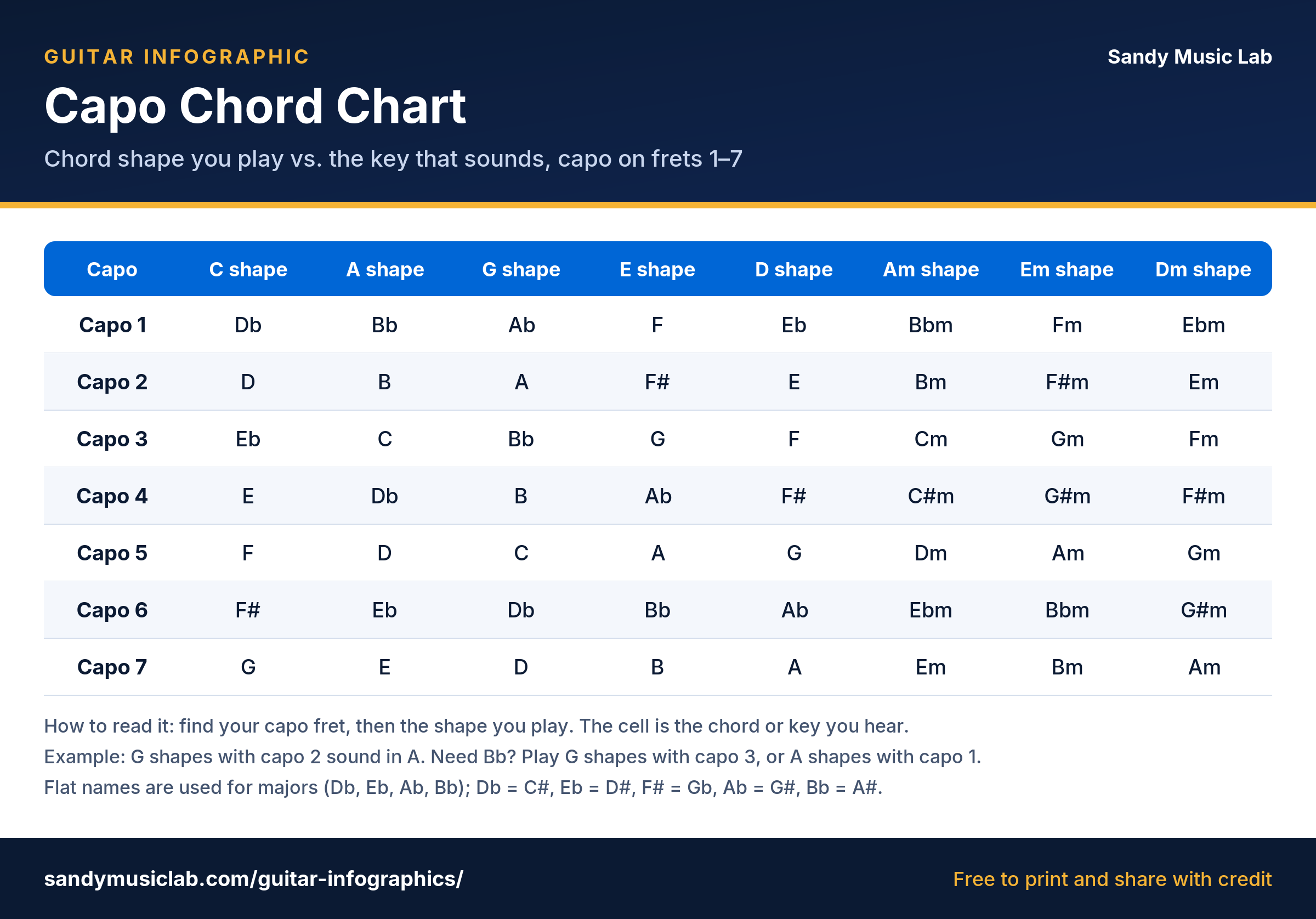
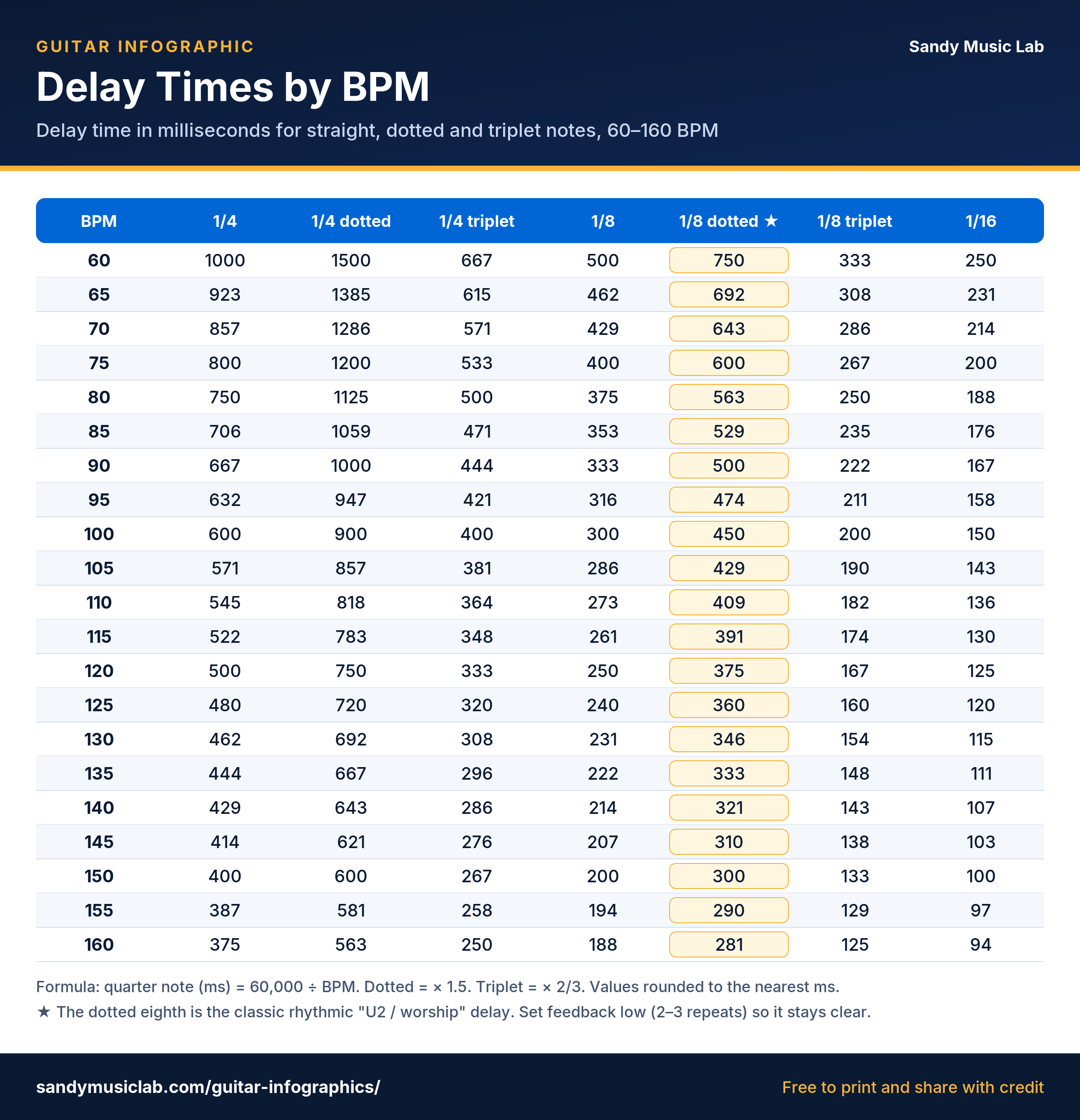
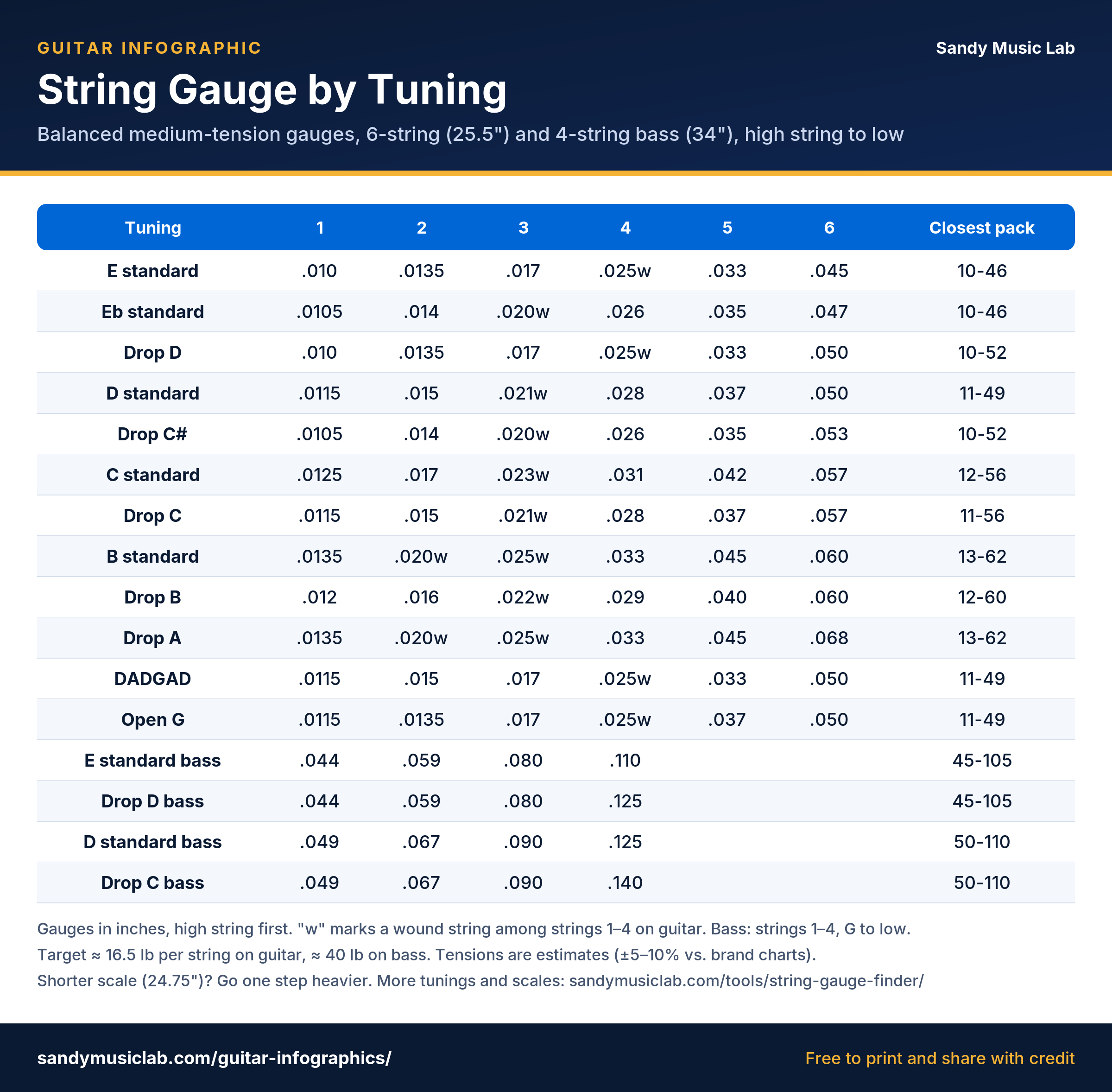
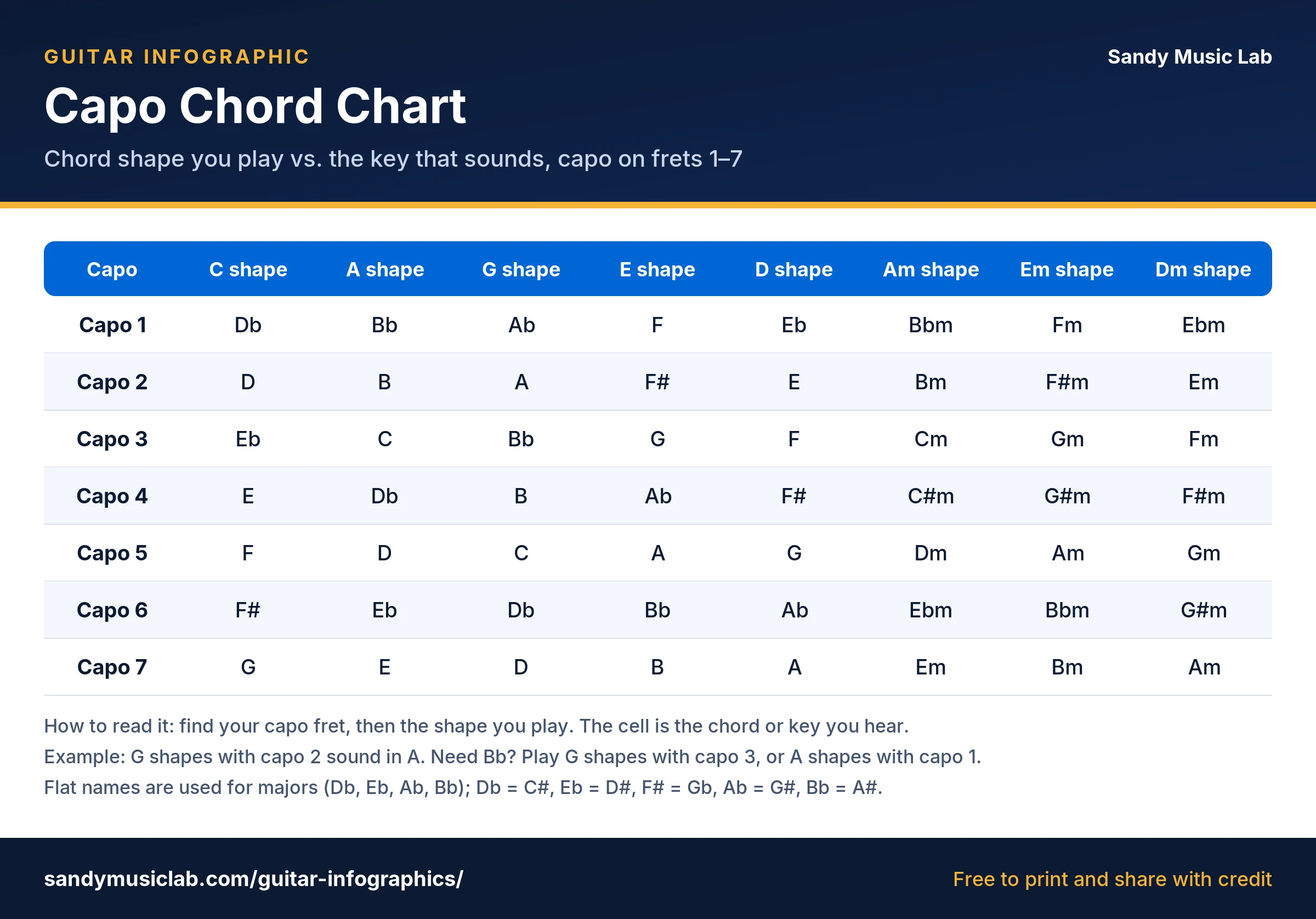
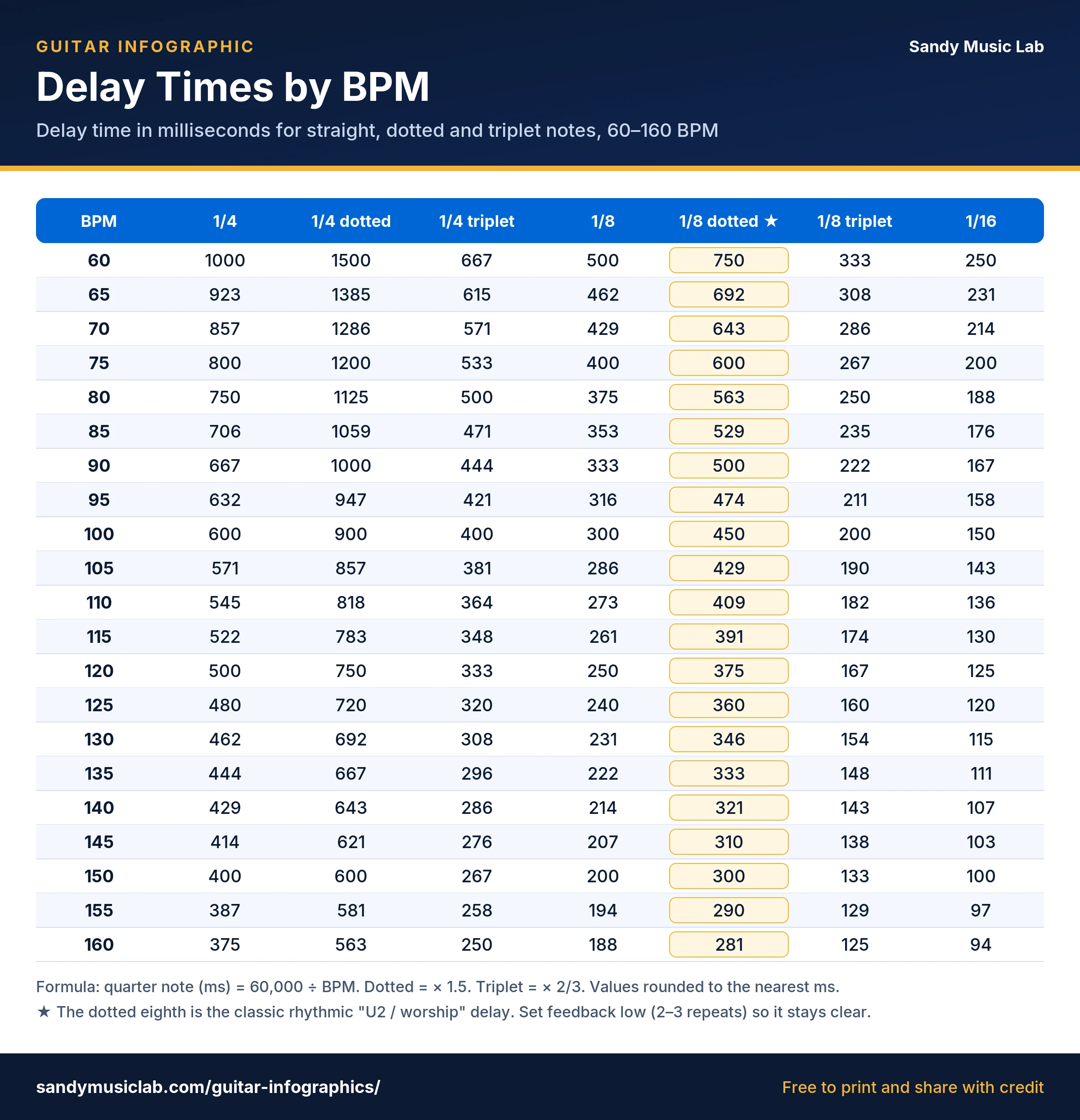
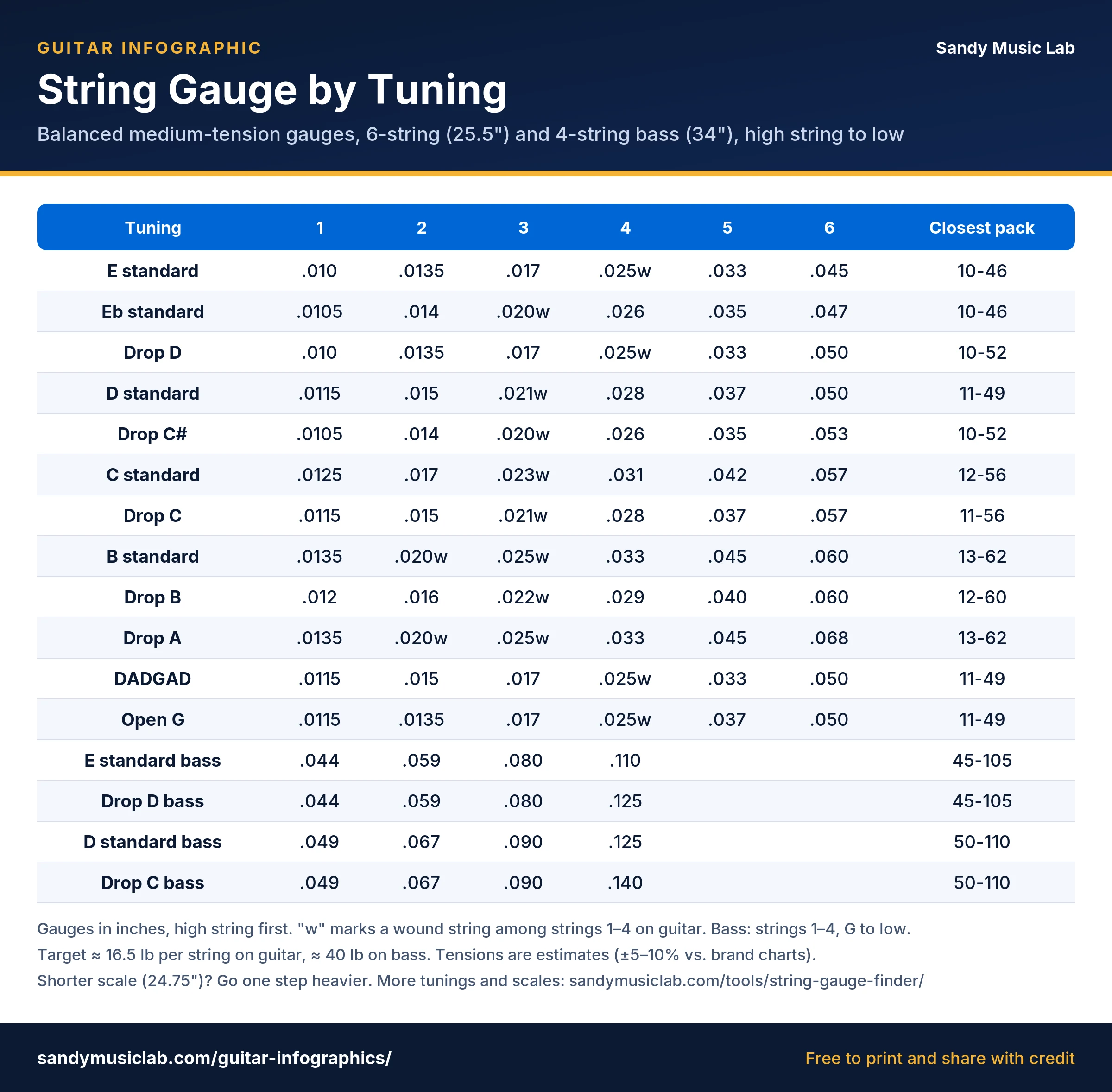
The capo chart moves each chord shape up one half step per fret. The delay chart uses quarter note (ms) = 60,000 ÷ BPM, with dotted notes at ×1.5 and triplets at ×2/3, rounded to the nearest millisecond. The string gauge chart uses the same tension model as our string gauge finder (medium feel, about 16.5 lb per guitar string and 40 lb per bass string). Its tensions are estimates within about 5–10% of brand charts.
Want the data behind worship keys? See our worship song key study of the CCLI Top 100.
Frequently asked questions
Can I print and share these infographics?
Yes. They are free to print, share and embed. If you post one online, please credit Sandy Music Lab with a link. The embed code does that for you.
What does a capo on fret 2 do to G chords?
Every chord goes up two half steps, so G shapes sound as A, C shapes as D and D shapes as E.
What is the dotted eighth delay time at 120 BPM?
375 ms. A quarter note at 120 BPM is 500 ms, an eighth is 250 ms and a dotted eighth is 250 × 1.5 = 375 ms.
What string gauge should I use for drop C?
On a 25.5″ scale, our chart suggests about .0115–.057 for a balanced medium feel. The closest standard pack is 11-56.