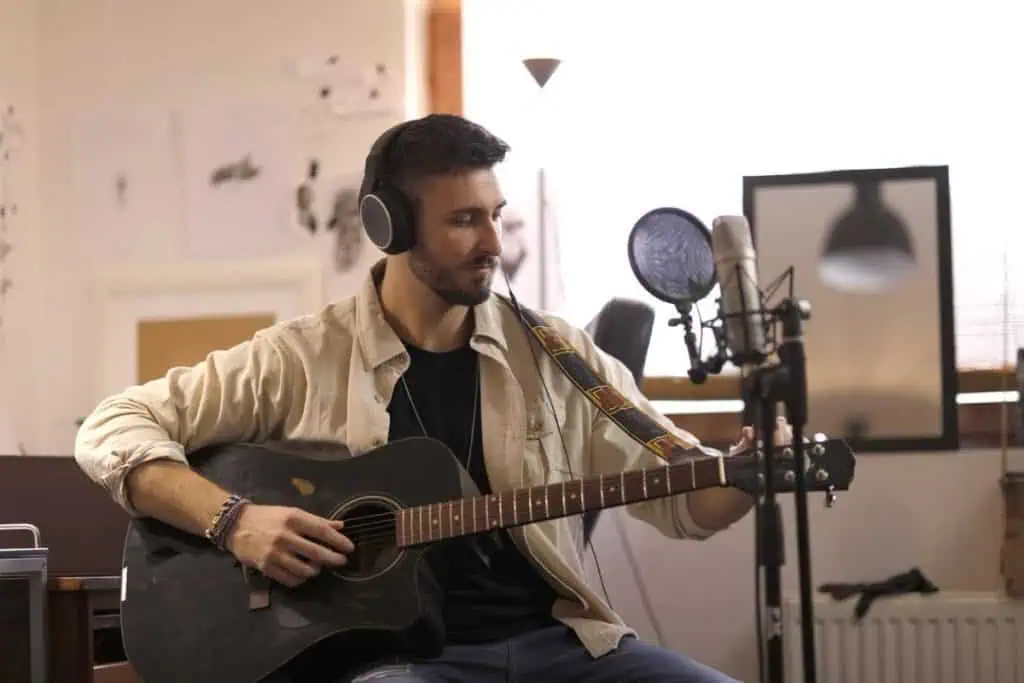
Quick answer: How to mic an acoustic guitar: the most reliable starting point is one condenser mic about 6–12 inches from the guitar, aimed at the spot where the neck meets the body (around the 12th–14th fret). Pointing at the soundhole gives more bass and boom; moving toward the bridge gives a warmer, woodier tone. Move the mic an inch at a time and listen on headphones.
Acoustic guitar is one of the most rewarding instruments to record, and also one of the easiest to get wrong. A few inches of mic movement can change the sound from muddy to sparkly. Here’s how I approach it. Once it’s recorded, here’s how to mix and master a song.
The same placement ideas apply when you learn how to record vocals at home.
Related: new to this topic? Start with our home recording studio setup guide.
Monitor your mic placement on the best headphones for recording so you hear what the mic hears.
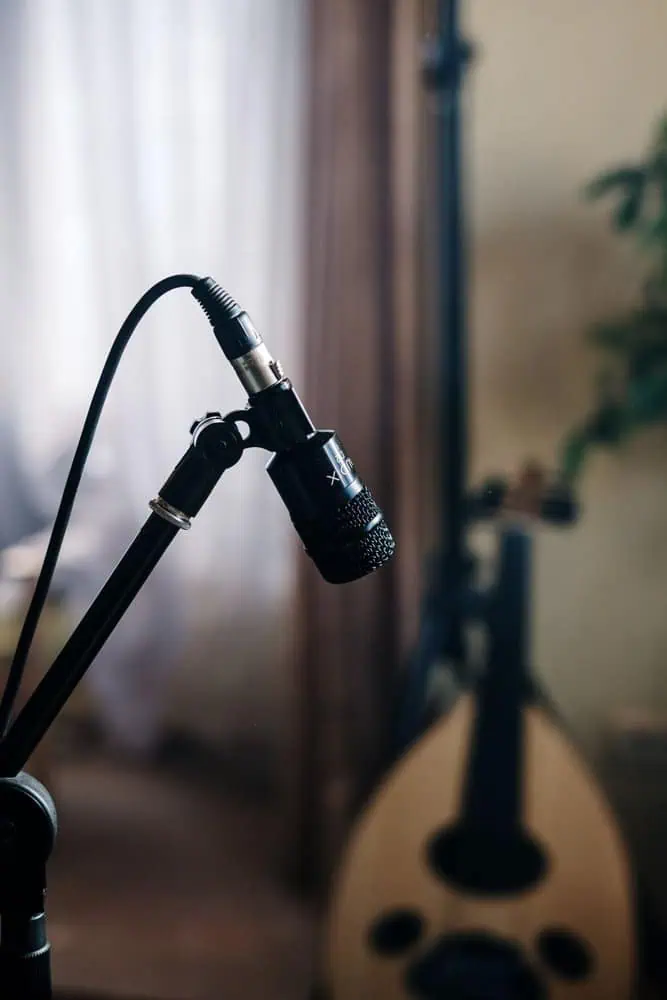
Which microphone is best for acoustic guitar?
| Mic type | Sound | Best for |
|---|---|---|
| Small-diaphragm condenser | Detailed, accurate, crisp highs | Strumming, fingerstyle, stereo pairs |
| Large-diaphragm condenser | Fuller, slightly warmer | Solo acoustic, singer-songwriter recordings |
| Dynamic | Less detail, handles noise well | Noisy rooms, live settings |
| Ribbon | Smooth, vintage, softer highs | Taming bright guitars (check phantom power safety first) |
Condenser mics need 48V phantom power from your interface. See my home recording setup guide for interface basics.
How to mic an acoustic guitar: where should you place the mic?
Position 1: 12th–14th fret (start here)
Aim at the neck joint from 6–12 inches. You get a balanced mix of string detail and body without excessive boom.
Position 2: soundhole
Lots of low end. Useful for a thin guitar, but often too boomy. Back the mic off or angle it away from the hole.
Position 3: lower bout / bridge
Warmer and woodier with fewer pick sounds. Good for strummed parts that need to sit behind vocals.
Position 4: over the shoulder
Placing a mic near the player’s ear, pointing down at the guitar, captures roughly what the guitarist hears. A nice natural option.
What about distance?
- Closer (3–6 inches): more bass (the proximity effect on directional mics), more detail, less room sound.
- Medium (6–12 inches): the sweet spot for most home recordings.
- Farther (18 inches or more): more natural and airy, but more room sound. Works best in a good-sounding room.
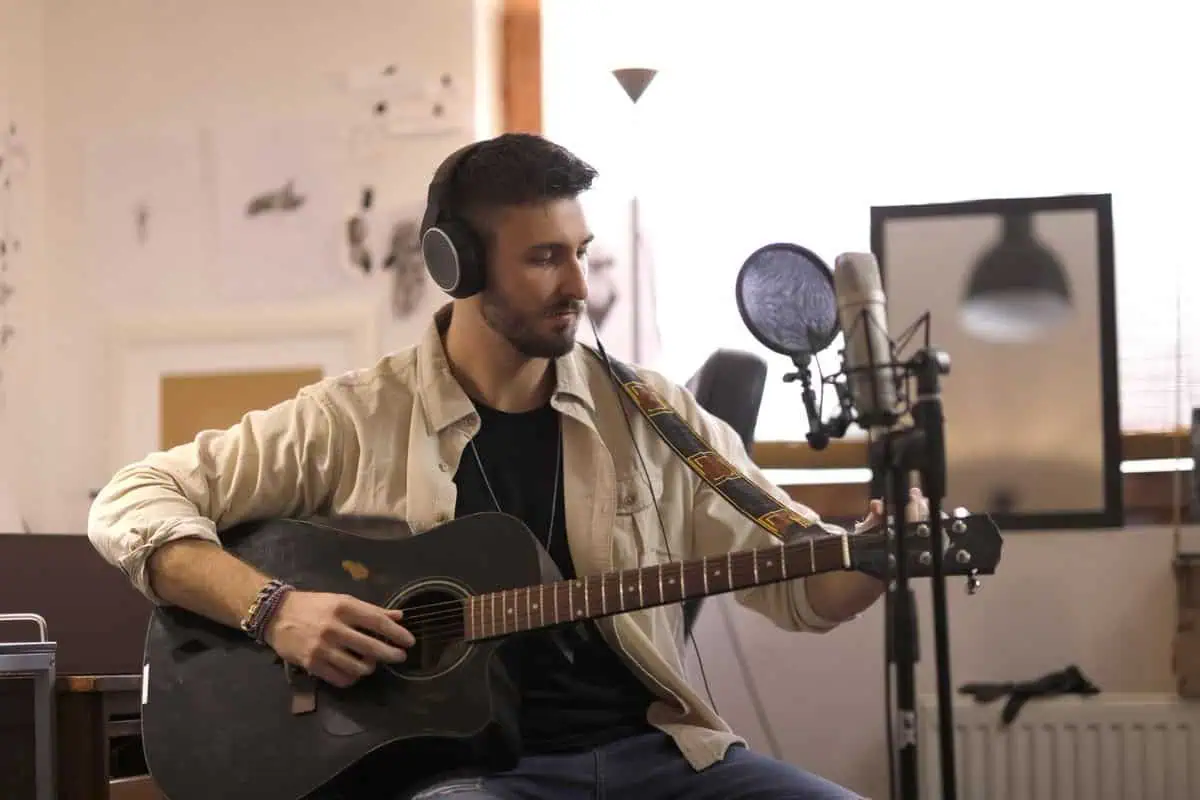
How do you record acoustic guitar in stereo?
- Spaced pair: one mic at the 12th fret, one near the bridge, both pointing at the guitar. Wide, but check that it still sounds good in mono.
- XY: two small-diaphragm condensers with capsules together, angled about 90 degrees apart. Good mono compatibility.
- Mic + pickup: blend a mic with the guitar’s DI signal. Align the tracks so they don’t cancel each other.
When using two mics, follow the commonly cited 3:1 guideline: keep mics at least three times as far from each other as each is from the source, to reduce phase problems.
How do you fix common acoustic recording problems?
| Problem | Try this |
|---|---|
| Boomy or muddy | Move away from the soundhole, back off the mic, or use a high-pass filter |
| Thin or harsh | Move toward the body/bridge, angle the mic off-axis slightly |
| Too much pick noise | Use a lighter pick or aim more toward the body |
| Room echo | Move closer, add blankets or furniture, or record in a smaller furnished room |
| Buzzes and noise | Check for fret buzz, turn off fans/fridge, and lower the gain |
Prepare the guitar before you record
- Use fresh (but stretched-in) strings. See best acoustic strings for recording.
- Tune carefully, and re-check between takes.
- Remove anything that rattles: strap buttons, capo when not in use, loose pickup cables.
- Sit in a quiet chair without squeaks.
A 10-minute mic placement routine
Don’t guess. Use this quick routine every time you set up to record acoustic guitar.
- Tune and play the part in the room. Walk around the guitar and listen with one ear near it. Where does it sound best to you? That’s often a good starting spot.
- Set the mic at the 12th–14th fret, about 8 inches away, pointed at the neck joint.
- Put on closed-back headphones and set the gain while you play your loudest part.
- Record 20 seconds, then move the mic 2 inches toward the soundhole and record again.
- Record another 20 seconds with the mic moved toward the bridge.
- Try one farther position (12–18 inches) to hear more room.
- Listen back without looking at which take is which, then pick your favorite.
Label each take with its position. Over time you’ll learn where your guitar and room sound best, and setup will take two minutes.
How should you mic different playing styles?
| Style | Starting position | Why |
|---|---|---|
| Hard strumming | 12–14th fret, 10–12 inches away | Distance smooths out loud transients and boom |
| Fingerpicking | 12th fret, 6–8 inches | Closer captures delicate string detail |
| Solo guitar piece | Stereo pair (XY or spaced) | Width and realism when the guitar stands alone |
| Guitar under a vocal | Toward the lower bout, slightly farther away | Warmer and less bright, leaving room for vocals |
| Recording while singing | Guitar mic angled down at the body, vocal mic above | Reduces guitar bleed into the vocal mic |
How do you avoid phase problems with two mics?
When two mics pick up the same guitar at slightly different distances, some frequencies can cancel. That’s called a phase problem, and it often makes the guitar sound thin or hollow when combined.
- Check mono: sum your mix to mono. If the guitar gets thinner, there’s a phase issue.
- Use the 3:1 guideline for spaced mics.
- Use XY so the capsules sit together and reach the s