Disclosure: Sandy Music Lab is reader-supported. Some links on this page are Amazon affiliate links, and we may earn a small commission if you buy through them, at no extra cost to you.
A good home recording studio setup doesn’t need a big budget or a dedicated room. Guitarists and songwriters can make release-quality recordings with a computer, an audio interface, one good mic and a pair of headphones. This guide is the hub of our home recording series: it explains how the pieces fit together and links to deeper guides on each one.
Short answer: to set up a home recording studio you need a computer, recording software (a DAW), an audio interface, at least one microphone with a stand and XLR cable, and closed-back headphones. Add studio monitors and basic acoustic treatment once you start mixing. A capable beginner setup costs roughly $300 to $500.
🎸 Free download
Not sure which guitar is right for you?
Get the free Guitar Gear Cheat Sheet: match your style, budget and hands to the right guitar in 2 minutes. You’ll also get my 30-Day Practice Plan as a bonus.
Send My Cheat Sheet →Quick Picks: The Core of a Home Recording Studio Setup
| Gear | Our pick | Who it’s for | Skip it if | Link |
|---|---|---|---|---|
| Audio interface (1 mic) | Focusrite Scarlett Solo 4th Gen | Solo guitarists or singers recording one source at a time | You need to record guitar and vocals at once | Check price on Amazon |
| Audio interface (2 mic) | Focusrite Scarlett 2i2 4th Gen | Singer-songwriters tracking voice and guitar together | You only ever record one thing at a time | Check price on Amazon |
| Instrument/amp mic | Shure SM57 | Miking guitar amps, rugged all-rounder | You only record direct or with modelers | Check price on Amazon |
| Vocal/acoustic mic | Audio-Technica AT2020 | Vocals and acoustic guitar in a reasonably quiet room | Your room is very noisy or echoey | Check price on Amazon |
| USB mic (no interface) | Audio-Technica AT2020USB-X | Laptop-only setups and BandLab/GarageBand users | You plan to add more inputs later | Check price on Amazon |
| Headphones | Audio-Technica ATH-M50x | Tracking and mixing with one pair | You want open-back mixing headphones | Check price on Amazon |
| Budget monitors | PreSonus Eris 3.5 (2nd Gen) | Small desks and tight budgets | You mix bass-heavy music | Check price on Amazon |
The Signal Path: Instrument, Interface, DAW, Monitors
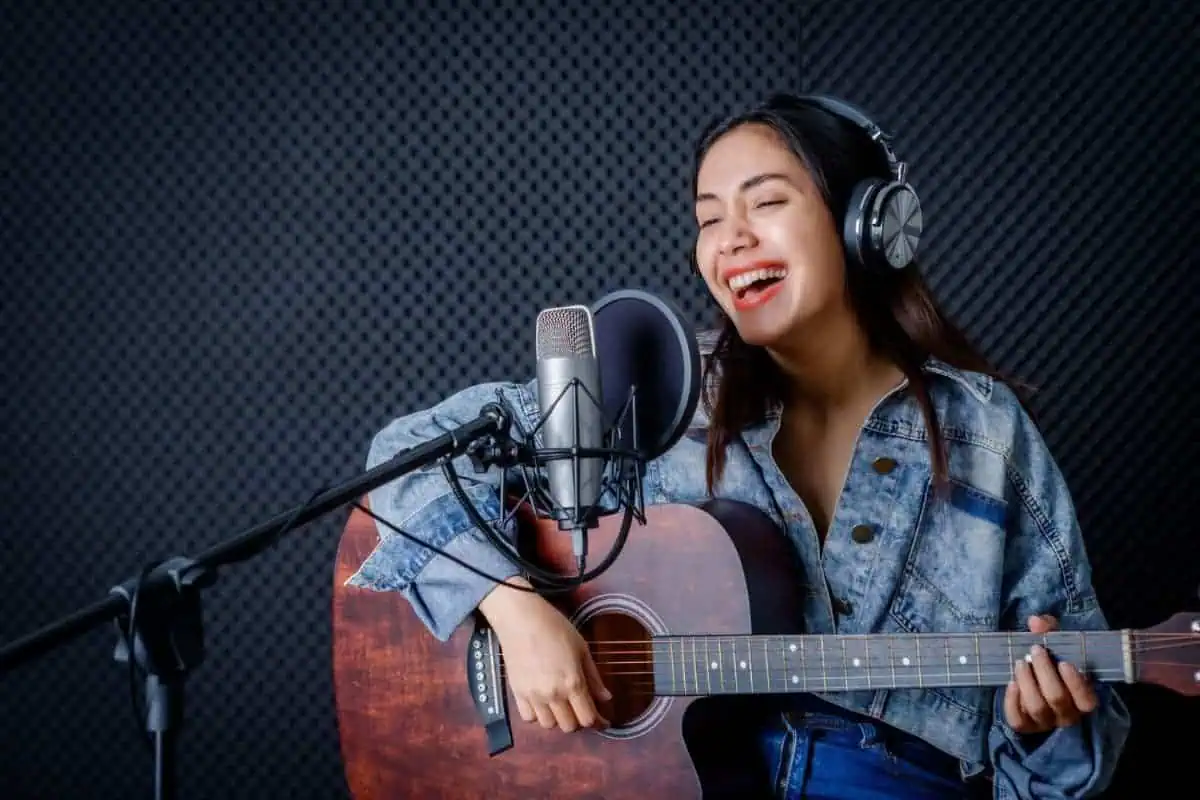
Every home studio follows the same chain. Understanding it makes troubleshooting and upgrading much easier.
- Source: your guitar, voice or amp.
- Transducer or cable: a microphone (for voice, acoustic guitar or an amp) or an instrument cable or DI (for direct guitar and bass).
- Audio interface: boosts the signal with a preamp and converts it from analog to digital.
- Computer and DAW: records, edits and mixes the tracks.
- Monitoring: the interface converts audio back to analog for your headphones or studio monitors.
If you hear a delay between playing and hearing yourself, that is latency. Our guide to fixing recording latency covers buffer sizes and direct monitoring. Brand new to all of this? Start with our home recording setup for guitar beginners.
Home Recording Studio Setup Essentials: Audio Interfaces and DI Boxes
An interface gives you clean preamps, phantom power for condenser mics, a Hi-Z instrument input for guitar and a headphone output. The main buying question is how many inputs you need:
- One input: fine if you record one thing at a time, such as guitar, then vocals.
- Two inputs: lets you sing and play at once, or use two mics on an acoustic guitar.
- Four or more: for recording a band or miking drums.
Plug an electric guitar into the instrument (Hi-Z) input, not a line input, or it will sound thin. A DI box converts an instrument signal to a balanced mic-level signal, which helps when you record bass or acoustic-electric guitar direct, run long cables, or want a clean track for reamping later. The Wikipedia overview of audio interfaces covers the technical terms.
Ready to compare? See the best audio interfaces for guitar and the best DI boxes. Short on gear? Here are 7 ways to record guitar without an audio interface.
Mics: Dynamic vs Condenser
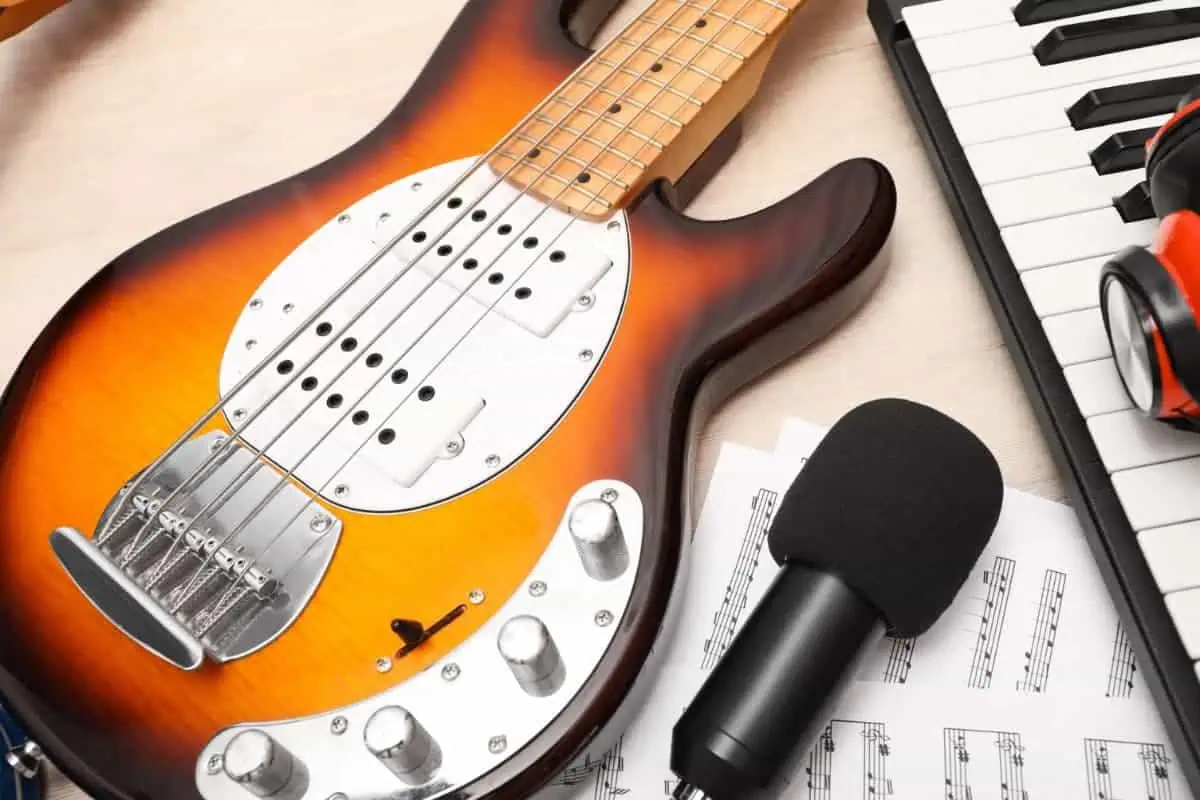
Start with one mic that suits what you record most.
| Mic type | Strengths | Best for |
|---|---|---|
| Dynamic | Rugged, handles loud sources, picks up less room sound | Guitar amps, loud vocals, untreated rooms |
| Large-diaphragm condenser | Detailed, sensitive, needs phantom power | Vocals and acoustic guitar in a quiet room |
| Small-diaphragm condenser | Accurate, fast transient response< |