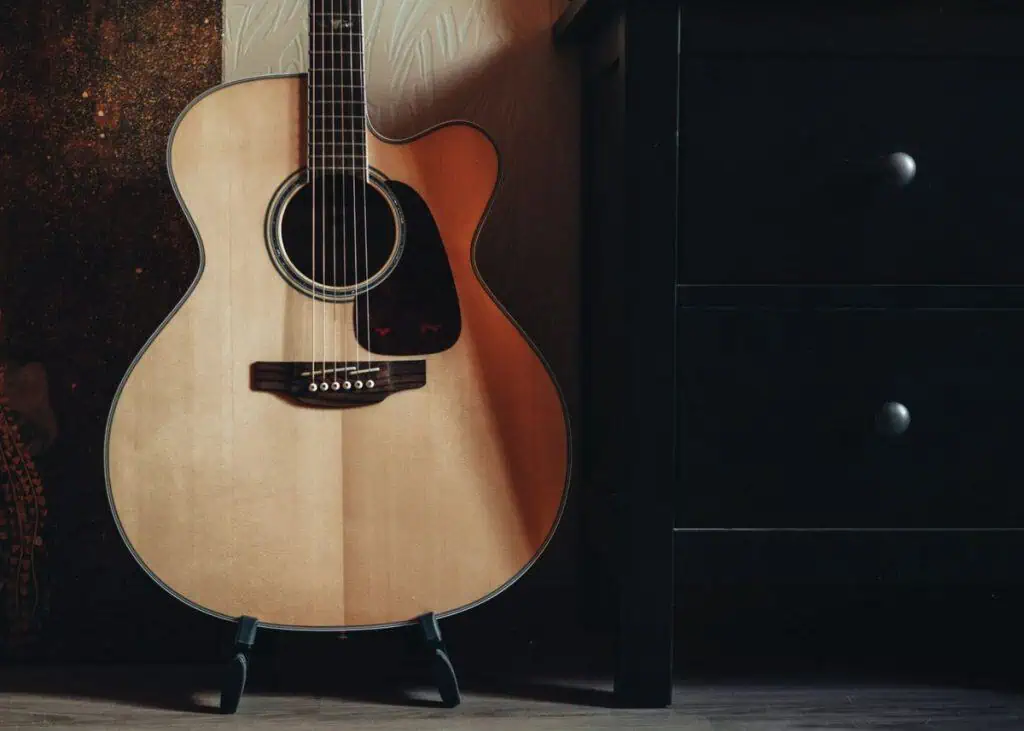
Yamaha has been building acoustic guitars since the 1960s, and in my experience no other brand gives you as much guitar for the money. The best Yamaha acoustic guitars are consistent, play well right out of the box, and hold up to years of practice, gigs, and late-night songwriting sessions. My first “real” acoustic was a Yamaha, and I still recommend them more than any other brand to friends who ask what to buy.
New to this? Read How to Choose an Acoustic Guitar: The Complete Guide first for the basics, then use the picks below.
In this 2026 guide, I compare the seven Yamaha acoustics I think are worth your money, from the legendary budget FG800 to the A.R.E.-treated LL6 and the amp-free TransAcoustic. You’ll learn which one fits your budget, body-size preference, and playing style.
Related: new to this topic? Start with our top picks for the best acoustic guitars.
Quick answer: Among the best Yamaha acoustic guitars, the top pick for most beginners is the Yamaha FG800, a solid-top dreadnought at a budget price. Step up to the FG830 or FS830 for fuller tone. For gigging, the FGX800C adds a cutaway and pickup. Serious players should look at the LL6 ARE, and the FG-TA TransAcoustic adds reverb and chorus with no amp.
Best Yamaha Acoustic Guitars Compared (2026)
| Model | Body | Top | Electronics | Best For |
|---|---|---|---|---|
| FG800 | Dreadnought | Solid spruce | No | Best overall budget pick |
| FS830 | Concert (small body) | Solid spruce | No | Smaller players, fingerstyle |
| FGX800C | Dreadnought cutaway | Solid spruce | Yes | Gigging on a budget |
| LL6 ARE | Original Jumbo | Solid spruce, A.R.E. treated | Yes | Serious players, recording |
| FG-TA TransAcoustic | Dreadnought | Solid spruce | Yes, built-in reverb/chorus | Practicing and songwriting with effects |
| CSF3M | Parlor | All solid | Yes | Travel, couch playing |
| JR1 | 3/4 size | Laminate spruce | No | Kids and travel |
You can see the full lineup on Yamaha’s official acoustic guitar page.
1. Yamaha FG800: Best Overall Yamaha Acoustic Guitar
Short answer: A solid spruce top, great playability, and a price that’s hard to beat.
The Yamaha FG800 is the guitar I recommend most often. It has a solid Sitka spruce top with nato back and sides, which gives it a bright, loud, balanced sound. Yamaha’s scalloped bracing helps it project more bass and volume than you’d expect at this price. It’s part of Yamaha’s long-running FG/FS series, which traces back to the original 1966 FG180.
- Pros: Solid top, excellent value, comfortable neck, consistent quality
- Cons: No pickup; action may benefit from a setup
Here’s a no-talking sound demo so you can hear the FG800 for yourself:
2. Yamaha FS830: Best Small-Body Yamaha Acoustic
Short answer: A concert-size body with a solid top and rosewood back and sides for a richer tone.
The Yamaha FS830 uses a smaller concert body that’s more comfortable for smaller players and anyone who plays sitting down. Its rosewood back and sides add warmth and sustain compared with the FG800’s nato. I love smaller bodies for fingerpicking and songwriting because the response is quick and the guitar sits right under your arm. Not sure which size fits you? Check my guide on choosing the right size acoustic guitar.
- Pros: Comfortable size, warm tone, great for fingerstyle
- Cons: Less bass and volume than a dreadnought
3. Yamaha FGX800C: Best Yamaha Acoustic-Electric for Gigging
Short answer: The FG800’s sound plus a cutaway and a built-in pickup and tuner.
The Yamaha FGX800C takes the FG800 formula and adds a single cutaway for upper-fret access and Yamaha’s onboard preamp with a built-in tuner. It’s the most affordable way to get a solid-top Yamaha you can plug straight into a PA at an open mic or church gig. If you’re weighing whether you need electronics at all, read my breakdown of the pros and cons of acoustic-electric guitars.