Walk into any music shop and you’ll see walls of guitar accessories, from tuners and capos to humidifiers, polishes and wireless systems. Most guitarists only need a handful of them on day one, and the rest depend on where you play, what climate you live in and how you look after your instrument.
This guide explains which guitar accessories you actually need, what each one does, and when it’s worth adding the extras. It doesn’t recommend specific products. When you know what you need, each section links to the matching Sandy Music Lab buying guide so you can compare models.
The Quick Answer: What Guitar Accessories Do I Need?
If you’re starting out, these cover almost every situation:
- A tuner (clip-on, pedal or app)
- A few picks in different thicknesses (unless you only play fingerstyle)
- A strap, if you’ll ever play standing up
- A cable, if you play electric or acoustic-electric
- A spare set of strings
- A case or gig bag to protect the guitar
- A stand or wall hanger so it’s out and easy to pick up
- A humidifier, if you own a solid-wood acoustic in a dry climate or heated home
Everything else — cleaning supplies, nut lubricant, wireless systems — becomes useful as you play more. Our best guitar accessories guide rounds up the most popular picks across all of these categories.
Day-One Essentials: Tuner, Picks, Strap and Cable
Tuner
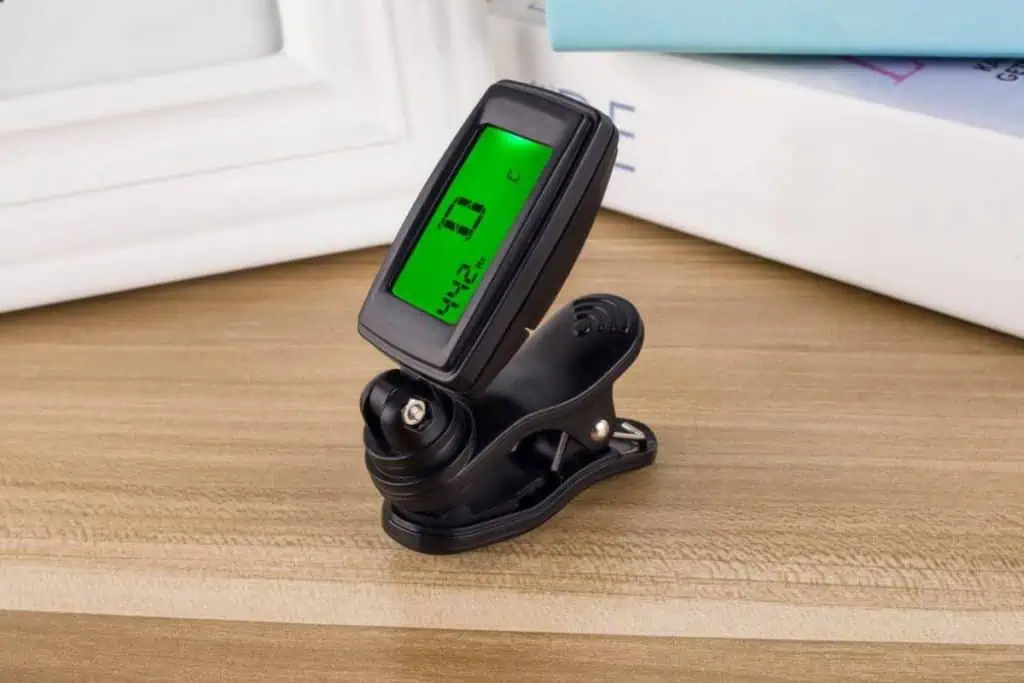
A guitar that’s out of tune makes everything sound wrong and makes learning harder, because your ear gets used to the wrong pitches. A tuner is the most important accessory you can own. There are four common types:
- Clip-on tuners attach to the headstock and read vibrations. They’re cheap, quiet-room friendly and work on acoustic guitars.
- Pedal tuners sit on a pedalboard and usually mute your signal while you tune, which is ideal for gigs.
- Polyphonic tuners let you strum all strings at once and see which are out.
- Strobe tuners are the most precise and are popular for setups and intonation work.
For background on how they work, Wikipedia’s article on the guitar tuner is a helpful read. To compare models, see our best guitar tuners guide.
Picks
Picks change your tone and feel more than many players expect. Thin picks are forgiving for strumming, medium picks are a good all-rounder, and heavy picks give control and attack for single-note lines and fast playing. Material and tip shape matter too. Buy a variety pack and see what feels natural. Our guitar picks buying guide breaks down thickness, material and shape.
Strap
Even if you mostly sit, a strap keeps the guitar in the same position when you stand, which helps your hands learn consistent shapes. Look for comfortable width, adjustable length and secure ends. Strap locks are worth considering for heavier guitars or live playing. See our best guitar straps guide.
Cable
Electric and acoustic-electric players need an instrument cable. Guitar cables are unbalanced TS (tip-sleeve) cables, and mixing them up with TRS cables can cause problems. Our explainer on TS vs TRS vs TRRS cables clears that up. A well-built cable with good connectors and a sensible length (long enough to move, short enough to avoid tangles) will last for years. Compare options in our best guitar cables guide.
Spare Strings
Strings break, usually at the worst moment. Keep at least one spare set in your case, ideally the same brand and gauge you already use so the guitar’s setup stays the same.
Storage: Cases, Gig Bags, Stands and Hangers
Hard Case or Gig Bag?
A hard case gives the most protection against knocks, pressure and changes in temperature and humidity. It’s the right choice for flying, shipping, valuable guitars and long-term storage. A gig bag is lighter and easier to carry, and padded gig bags protect well enough for everyday trips to lessons, rehearsals and local gigs. Many players use both. Make sure the case actually fits your guitar’s body shape; a dreadnought case won’t fit a jumbo, and electric shapes vary a lot. Our guide to guitar cases and gig bags covers acoustic, electric and classical sizes.
Stands and Wall Hangers
A guitar you can see is a guitar you’ll pick up. Stands and hangers keep your instrument out and ready, which tends to mean more practice. Things to think about:
- Floor stands are portable and good for gigs. Choose one with a neck support for stability.
- Wall hangers save floor space and keep guitars away from pets and kids. Mount them into a stud or with proper anchors.
- Multi-guitar racks suit players with a growing collection.
- Finish compatibility matters: some rubber and foam can react with nitrocellulose finishes over time, so check the padding.
- Climate: a guitar out of its case is exposed to the room’s humidity, so pair a stand with good room humidity control.
See our best guitar stands and hangers.
Climate and Humidity Care
Humidity is the accessory topic that matters most for acoustic guitars, and the one beginners most often ignore. Solid wood absorbs and releases moisture. When the air is too dry, the wood shrinks, which can cause sharp fret ends, a sinking top, lifting bridges and cracks. When it’s too humid, the top can swell, the action rises and the guitar can sound dull.
Many guitar makers suggest keeping acoustic guitars at roughly 45–55% relative humidity. D’Addario’s humidification resources explain the risks and the two main approaches in more detail.
Signs Your Guitar Is Too Dry
- Fret ends sticking out past the edge of the fingerboard
- Lower action and new string buzz
- A top that looks sunken behind the bridge
- Cracks in the top or along the fingerboard edge
Signs It’s Too Humid
- Higher action and harder playability
- A bulging top behind the bridge
- A dull, muffled tone
Your Options
- Soundhole and case humidifiers add moisture inside the guitar or case.
- Two-way humidity packs add or absorb moisture to hold a set level.
- Room humidifiers look after several guitars at once.
- Hygrometers measure humidity so you know whether you need to act at all.
Compare options in our best guitar humidifiers guide. Solid-body electric guitars are less sensitive, but their necks and frets still react to big seasonal swings.
Cleaning and Maintenance Supplies
Regular cleaning makes strings last longer, keeps the finish looking good and helps you spot problems early. You don’t need much:
- Microfiber cloths for wiping strings and body after every session.
- Guitar polish and wax made for your finish type (gloss, satin or nitro). Avoid household furniture polish with silicone. See our best guitar polish and cleaner guide.
- Fretboard conditioner for unfinished rosewood and ebony boards, used sparingly a couple of times a year. Maple boards are usually finished and don’t need oil.
- A cleaning kit that bundles cloths, polish and conditioner. Compare in our best guitar cleaning kits.
- Nut lubricant helps strings slide through the nut slots, which reduces tuning problems and pinging, especially with whammy bars and big bends. See our best guitar nut lubricant guide.
- Basic tools: a string winder, string cutters, the right truss rod wrench and a small screwdriver set.
For a full routine, read our guide to guitar maintenance and how to clean a guitar.
A Simple Routine
- After each session: wipe the strings and the back of the neck.
- At each string change: clean the fingerboard and frets while the strings are off.
- Every few months: polish the body and check the setup, tuners and strap buttons.
- Seasonally: check humidity and neck relief as the weather changes.
Wireless and Live-Playing Extras
Once you start gigging or playing on stage regularly, a few extras become more useful:
- Wireless systems replace the cable between your guitar and amp or pedalboard. They give you freedom to move and remove a trip hazard. Look for low latency, reliable range and good battery life. See our best wireless guitar systems.
- Capo: lets you change key while using familiar chord shapes, which singers rely on constantly. Wikipedia’s article on the capo explains the basics.
- Spare cables, strings and batteries in a small pouch.
- Strap locks so the guitar can’t fall off mid-song.
- A small light and a gig bag organiser for dark stages.