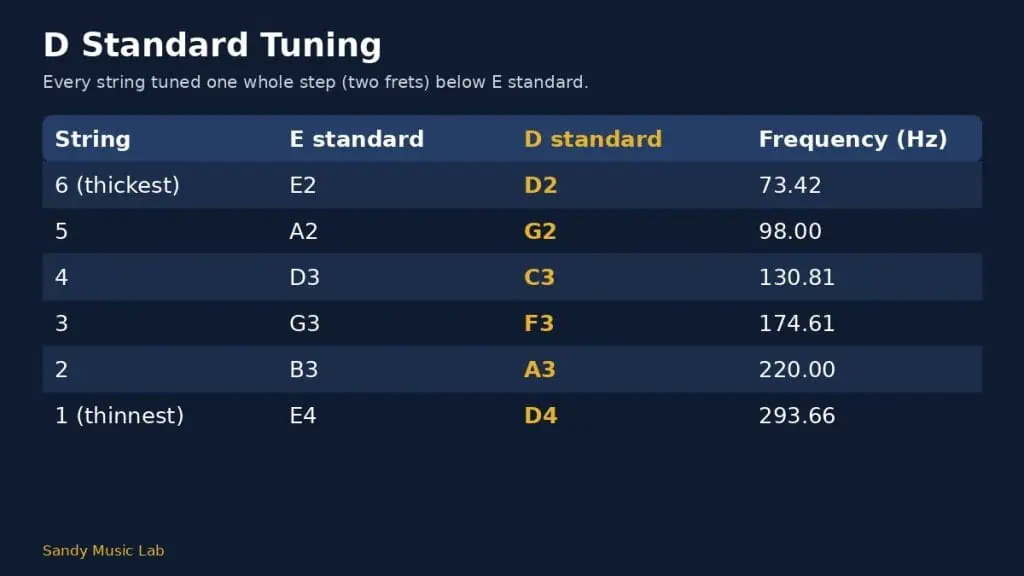
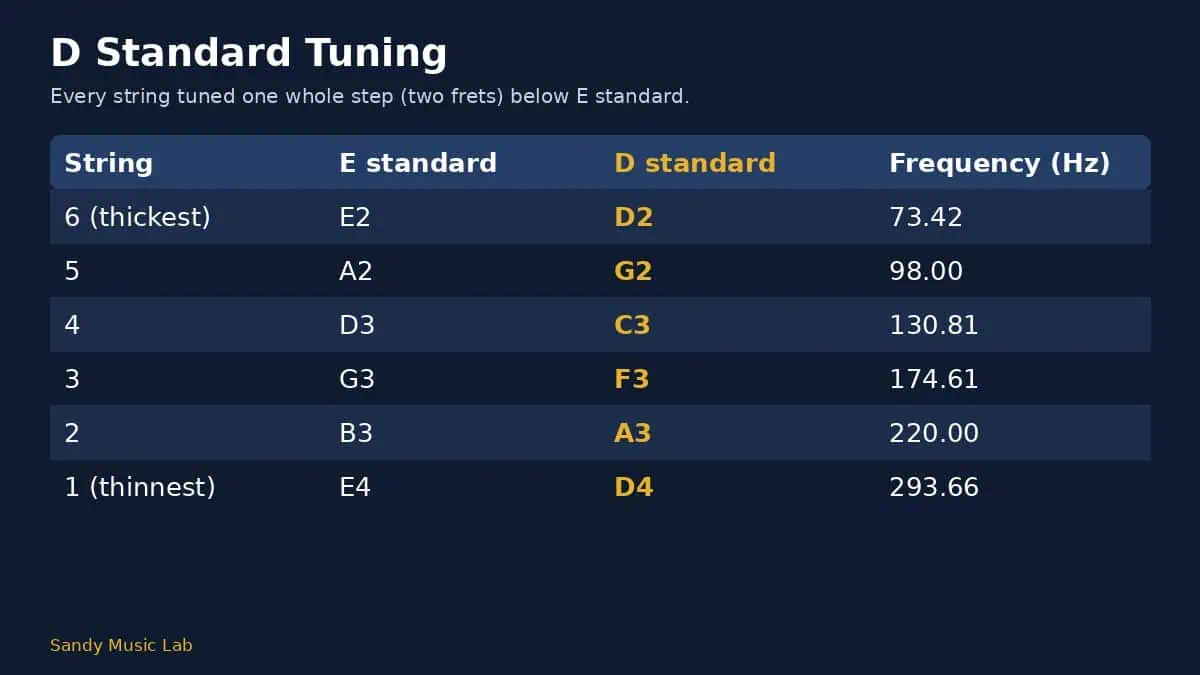
D standard tuning is D G C F A D from the thickest string to the thinnest: every string tuned one whole step (two frets) below standard E tuning. Chord shapes and scale patterns stay the same, but everything sounds two semitones lower, with a heavier, darker tone. This guide covers the notes and frequencies, how to tune to D standard, which strings to use, and how it compares with drop D and other lower tunings.
Quick answer: D standard tuning is D2 G2 C3 F3 A3 D4, or D G C F A D, from the 6th string to the 1st. It is standard tuning lowered a whole step, so every chord shape sounds two half steps lower (an E shape sounds as D). Many players move up one string gauge, such as 11-49 instead of 10-46, to keep the strings from feeling loose.
What is D standard tuning?
D standard keeps the same intervals as standard tuning: fourths between strings, with a major third between the G and B strings (here F and A). Because the shape of the tuning does not change, every chord, scale and riff you already know works exactly the same way. It just sounds a whole step lower.
That makes it popular with singers who want songs a little lower, and with rock and metal players who want a heavier sound without learning new shapes. It is also called “whole step down” or “one step down” tuning.
How do you tune to D standard?
- Tune the 6th string down from E to D. A tuner should read D2 (73.42 Hz).
- Tune the 5th string down from A to G (98.00 Hz).
- Tune the 4th string down from D to C (130.81 Hz).
- Tune the 3rd string down from G to F (174.61 Hz).
- Tune the 2nd string down from B to A (220.00 Hz).