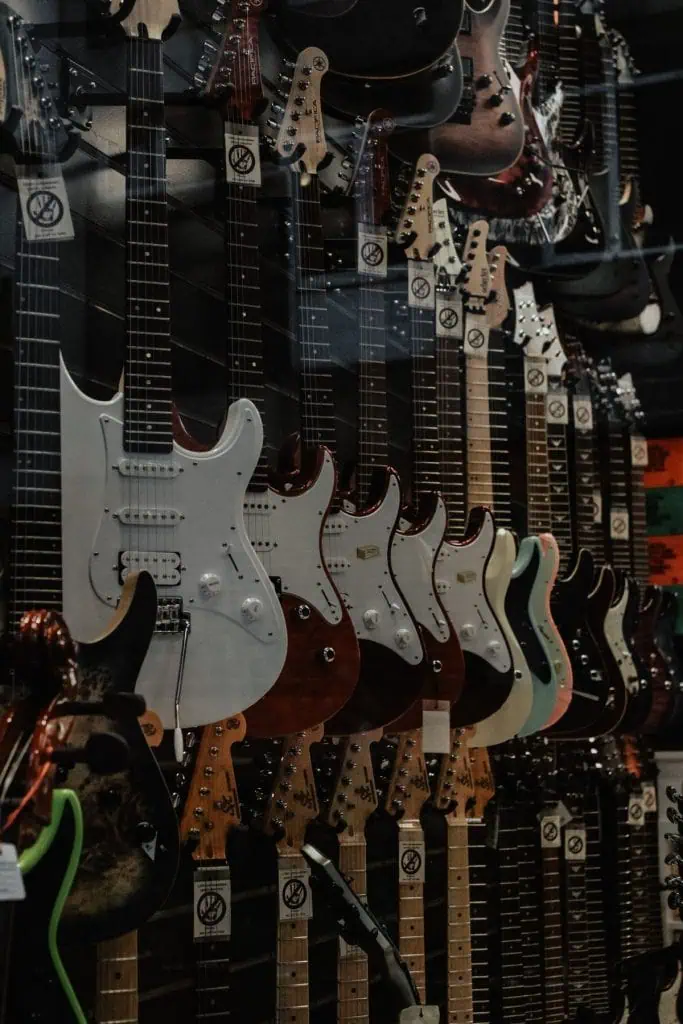
Once you can play a handful of songs, change your own strings and feel your beginner guitar holding you back, it’s time to upgrade. This guide to the best intermediate guitars covers acoustic, electric and bass models priced roughly $400 to $1,000. At that price you get solid tops, better pickups, smoother frets and hardware that stays in tune, which are the things that make you want to pick up the guitar every day.
We picked six instruments from brands with long track records: two acoustics, two electrics and two basses. Each one is a real step up from entry-level gear without the price of a professional instrument. Below you’ll find a quick comparison table, a review of each guitar with pros and cons, buying advice and answers to common questions.
New to this? Start with our guide on how to buy a guitar.
Related: best quality guitars, best looking guitars, and best high-end guitars. Our rundown of the best guitar brands covers the basics in one place.
Want to see more options from one brand? Our guide to the best Ibanez guitars covers six great electric, acoustic-electric and bass picks.
Best Intermediate Guitars 2026: Quick Comparison
| Guitar | Type | Key Features | Best For | Approx. Price |
|---|---|---|---|---|
| Taylor GS Mini-e Rosewood | Acoustic-electric | Solid Sitka spruce top, ES-B electronics, compact body | Travel, small hands, home recording | $700–$800 |
| Yamaha A1R | Acoustic-electric | Solid spruce top, rosewood back and sides, SRT pickup, cutaway dreadnought | Gigging singer-songwriters | $700–$800 |
| Fender Player II Stratocaster | Electric | Alnico V single coils, rolled fretboard edges, 2-point tremolo | Blues, funk, pop, indie | $750–$850 |
| Epiphone Les Paul Standard ’60s | Electric | Mahogany body, maple top, ProBucker humbuckers | Rock, blues, classic tones | $600–$700 |
| Fender Player II Precision Bass | Bass | Split-coil pickup, modern C neck, 4-saddle bridge | Rock, punk, Motown, any band | $800–$900 |
| Ibanez SR505E | 5-string bass | Bartolini pickups, 3-band EQ, thin SR neck | Modern rock, metal, gospel, fusion | $700–$800 |
Prices change often. Check the current price before you buy.
Intermediate Acoustic Guitars

1. Taylor GS Mini-e Rosewood
The GS Mini is one of the most popular acoustic guitars Taylor makes, and the rosewood version is the one we’d pick for an upgrade. It pairs a solid Sitka spruce top with layered rosewood back and sides, so you get the warmth and projection of a solid top along with a body that shrugs off humidity swings better than all-solid guitars do.
The scaled-down body and 23.5-inch scale make it comfortable for players with smaller hands, kids moving up from a starter guitar, and anyone who plays on the couch for hours. Don’t let the size fool you: it sounds much bigger than it looks, with a focused low end and clear trebles that record well. The built-in Taylor ES-B pickup includes a tuner, and the included gig bag is better padded than most.
The shorter scale means slightly lower string tension. That makes bends easier, but players who strum hard may find it a little less punchy than a full-size dreadnought.
Pros
- Solid spruce top that keeps getting better as it ages
- Very comfortable size and easy playability
- Built-in electronics with an onboard tuner
- Excellent build quality and setup out of the box
Cons
- Less bass and volume than a full-size guitar
- Price is at the higher end for a compact acoustic
2. Yamaha A1R
Yamaha’s A Series is built for players who perform. The A1R has a solid Sitka spruce top with scalloped bracing, rosewood back and sides, and a cutaway dreadnought body that gives you full-size volume plus easy access to the upper frets. Yamaha has spent decades making reliable acoustics, and the fit and finish on this one are impressive at the price.
The standout is the electronics. Yamaha’s SRT piezo pickup avoids much of the harsh, quacky tone cheaper piezos have, so you can plug straight into a PA or audio interface and get a natural sound. The preamp has a three-band EQ, an adjustable midrange frequency to fight feedback, and a built-in tuner.
Unplugged, it sounds balanced and strong, with enough low end to back up a voice. The full 25.5-inch scale feels a little firmer under the fingers than the Taylor’s short scale, which some players love and others need time to get used to.
Pros
- Full-size dreadnought volume with a solid top
- One of the best-sounding pickup systems in this price range
- Cutaway for upper-fret lead playing
- Yamaha reliability
Cons
- No case or gig bag included
- The large body is less comfortable for smaller players
Intermediate Electric Guitars

3. Fender Player II Stratocaster
If you’ve been playing a Squier or another starter electric, the Fender Player II Stratocaster is the obvious next step. It is Fender’s main mid-priced Strat, refreshed with rolled fretboard edges that make the neck feel worn-in, a Modern C neck profile, and three Alnico V single-coil pickups voiced for clear, bell-like tone.
The five-way switch covers everything from glassy neck tones for blues to quacky in-between positions for funk to a bright bridge pickup for country and indie. The two-point tremolo stays in tune well for light vibrato, and the 22 medium-jumbo frets make bends feel easy. Versions are available with a rosewood or maple fretboard and an HSS layout (a humbucker in the bridge) if you play heavier music.
Single coils hum a little under high gain, which is normal for the design. If you play mostly metal, the HSS version or the Les Paul below is a better fit.
Pros
- Classic, versatile Strat tones
- Comfortable neck with rolled edges
- Strong resale value
- Huge range of colors and configurations
Cons
- Single-coil hum with high gain
- No case or gig bag included
4. Epiphone Les Paul Standard ’60s
The Epiphone Inspired by Gibson line brought the company much closer to the real thing, and the Les Paul Standard ’60s is the best of the bunch for most players. It has a mahogany body with a maple top (flame-maple veneer on the burst finishes), and a slim-taper neck modeled on early-’60s Gibsons. That thinner neck is a big plus if you’ve found other Les Pauls too clubby.
The ProBucker 2 and 3 humbuckers deliver thick, singing tones that work for classic rock, blues and hard rock, and they clean up nicely when you roll back the volume. CTS pots and a Switchcraft toggle switch, which used to show up only on more expensive guitars, make the controls feel solid and dependable. A Graph Tech nut and Grover tuners help it stay in tune.
Like every Les Paul, it is heavy, often around 9 pounds, and the upper-fret access is tighter than on a Strat. If you play standing up for long sets, a wide padded strap is a must.
Pros
- Warm, powerful humbucker tone
- Comfortable slim-taper neck
- Upgraded electronics and hardware for the price
- Looks the part, with gorgeous finishes
Cons
- Heavy
- Upper-fret access is limited compared to double-cutaway guitars
A new electric guitar or bass deserves fresh strings, so check our guide to the best electric guitar strings before your first session. If you also want to explore a different flavor of electric, see our best Jackson guitars.
Intermediate Bass Guitars
5. Fender Player II Precision Bass
The Precision Bass has been on more records than almost any other bass, and the Player II version is a great way to get that sound without paying for a USA model. It has a single split-coil pickup that delivers the round, punchy midrange that sits perfectly in a band mix, whether you play rock, punk, soul or worship music.
The controls are simple: one volume knob and one tone knob. That simplicity is part of the appeal, since you spend your time playing instead of tweaking. The Modern C neck is comfortable for players with average hands, and the rolled fretboard edges are especially nice on a bass, where you move around the neck a lot. The four-saddle bridge makes intonation adjustments straightforward.
If you want a wider range of tones, especially a brighter, more growly sound for slap, consider a Jazz Bass or a PJ (Precision plus Jazz pickup) model instead.
Pros
- Iconic tone that fits almost any genre
- Simple, reliable controls
- Comfortable neck and solid build
- Holds its value well
Cons
- Limited range of tones
- Heavier than many modern basses
6. Ibanez SR505E
For bassists who want to go beyond the four-string basics, the Ibanez SR505E is one of the best five-string basses at this price. The SR series is known for its thin, fast neck, which makes the extra string much easier to manage than on many five-strings. The low B string lets you play lower notes for heavy rock, metal, gospel and modern pop without retuning.
It has a pair of Bartolini BH2 humbucking pickups and an active three-band EQ with a switchable mid frequency, so you can shape your tone from deep and smooth to