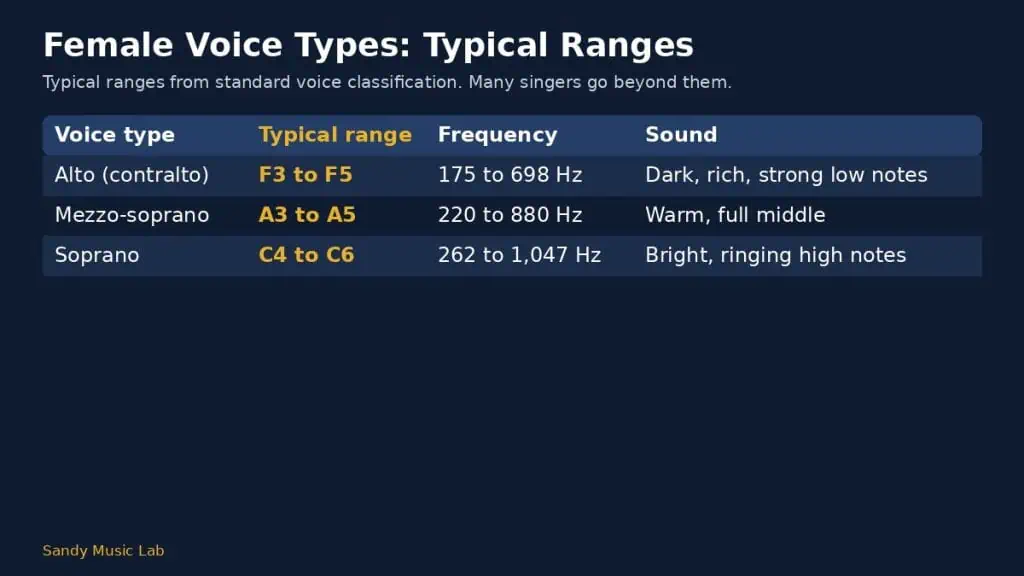
The main difference in alto vs mezzo soprano is where the voice sits. An alto (in classical terms, a contralto) is the lowest female voice, typically about F3 to F5. A mezzo-soprano sits a few notes higher, about A3 to A5, between alto and soprano. This guide compares their ranges, tone and register shifts, explains why choir “alto” parts are often sung by mezzos, and shows how to find out which you are with a free vocal range test.
Quick answer: an alto (contralto) range is about F3 to F5 and a mezzo-soprano range is about A3 to A5. Altos have stronger, darker low notes; mezzos have a fuller upper middle and reach higher with ease. In a choir, the alto part is often sung by both mezzos and contraltos, so “alto” can mean a choir part as well as a voice type.
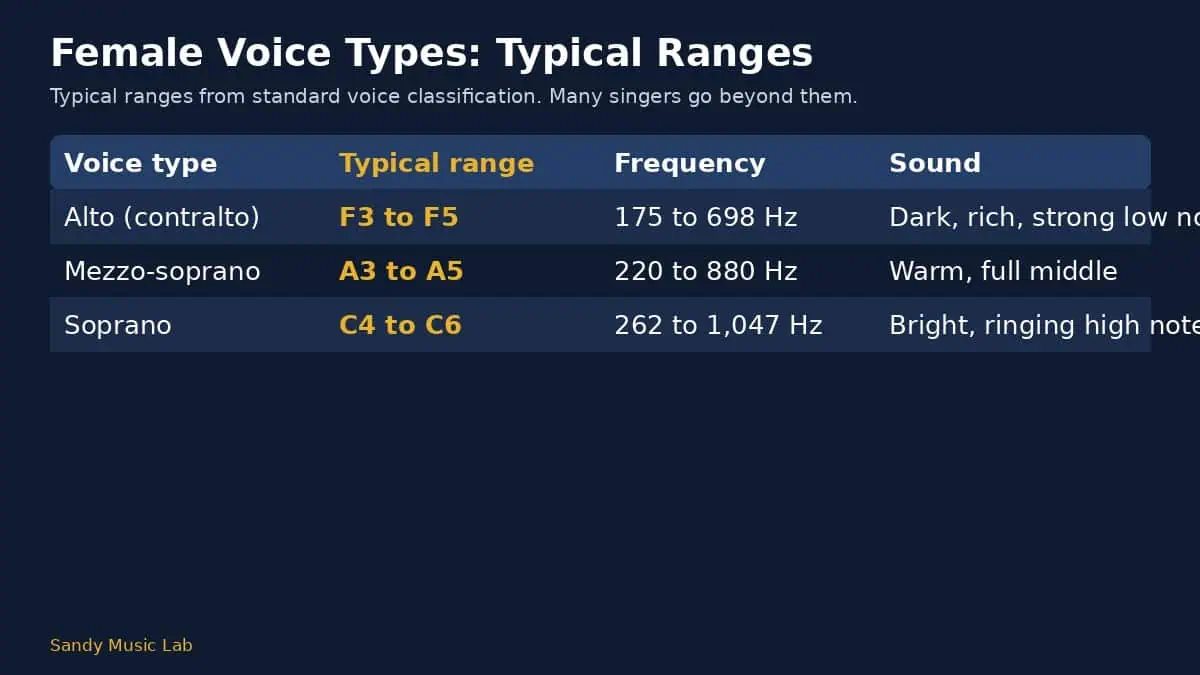
Alto vs mezzo soprano at a glance
| Alto (contralto) | Mezzo-soprano | |
|---|---|---|
| Typical range | F3 to F5 | A3 to A5 |
| Lowest comfortable notes | Strong down to about F3 or lower | Fades below about A3 |
| Sound | Dark, rich, heavy | Warm, full, flexible |
| Comfortable middle | Roughly A3 to D5 | Roughly C4 to E5 |
| How common | Rare as a true contralto | Common |
These are typical voice type ranges. Range alone doesn’t decide your voice type: voice teachers also listen to tessitura (where you are most comfortable), timbre and where your voice changes register.