The world of guitar players is divided into two camps regarding the number of pickups you need on your guitar. Some prefer guitars with two or even three pickups, while others swear that single pickup guitars can work miracles. This is quite an interesting topic and an important consideration when choosing the right guitar for your playing style, music genre, and other individual-specific factors.
Here are seven surprising benefits of a single pickup guitar:
- They are easier to use.
- They’re more affordable.
- They encourage creativity.
- They make less noise.
- They have a brighter sound.
- They look cool.
- They sound unique.
In the rest of this article, I’ll cover the above benefits of a single pickup guitar in greater detail to help you determine whether this guitar type is ideal for you. I’ll also explain whether these guitars have weaknesses to inform your guitar choice, so stick around for the long haul. Let’s diver right it.
Related: what is a passive pickup on an acoustic guitar, do one pickup guitars sound better? 9 things to know, and thin vs thick neck guitar.
👇😀👇NOTE👇😀👇
If you want to find out what my recommended guitar gear is, then here is what I recommend on Amazon:
- Fender Cutaway Acoustic-Electric Guitar Bundle (MY FAVORITE GUITAR)
- Snark SN-8 Super Tight All Instrument Tuner (Easiest Tuner I’ve Used😏)
- 6 String Acoustic Guitar Capo (Best CAPO for quick changes)
- Dunlop Max Grip 1.0mm Nylon Picks (Thick Guitar Pick So You Don’t Lose Grip!)
- Universal Guitar Stand (Cheap & Minimalist Guitar Stand I Recommend)
- Levy’s 2″ Wide Quick Adjust Guitar Strap (Best Guitar Strap For Any Level)
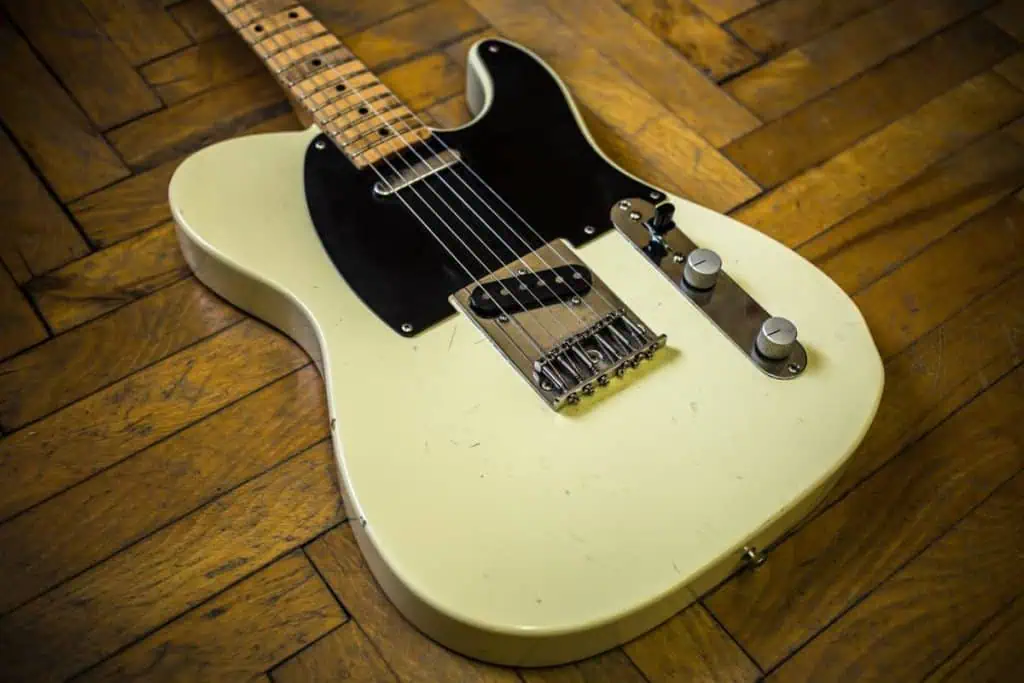
1. They Are Easier To Use
The main benefit of single pickup guitars is that they are very simple to use. You can just take one, plug it in, and start playing it almost immediately. This simplicity is granted by the relative simplicity of this guitar’s build. Since there is only one magnet, there are fewer knobs to adjust, so you’ll spend less time fiddling with that and more time playing.
If there’s only one pickup, that also means that you can tailor the rest of your guitar for it and have more control over your sound. If there are more pickups on the guitar, that might mean that there’s more versatility, but it also means that there are more variables to account for when setting up your amp and pedals.
In contrast, if there is only one pickup, you can adjust the tone and volume and then focus solely on your pedals and amp settings. You’ll only be worrying about the effect of all the changes on one pickup (not two or three), which will make everything much easier to set up and grant you more time for playing.
What’s best, this does not mean that you’ll be limited sonically. While you could pull more variety from a guitar with more than one pickup than a single pickup guitar, you can still do so many things with a single pickup guitar. This is partly due to the ease of setting up this guitar type and adjusting your amp.
Chances are, your favorite rock tunes were recorded on single pickup guitars or only using the bridge pickup. Single pickup guitars worked very well for guitar legends such as Keith Richards and Phil-X, so it’s obvious that you can use one to work magic as long as you adapt to it.
2. They Are More Affordable
Despite being hailed as top-notch guitars today, many single pickup guitars 一 such as the Gibson Junior 一 were initially created as budget-friendly options for beginners and students. This tradition of single pickup guitars has persisted until today, so a single pickup guitar will often be a more affordable option.
Single pickup guitars are typically more affordable due to their simplicity. Since there is only one pickup, there is less wiring and fewer knobs, which means that less material and time have to be invested in the making of a single pickup guitar.
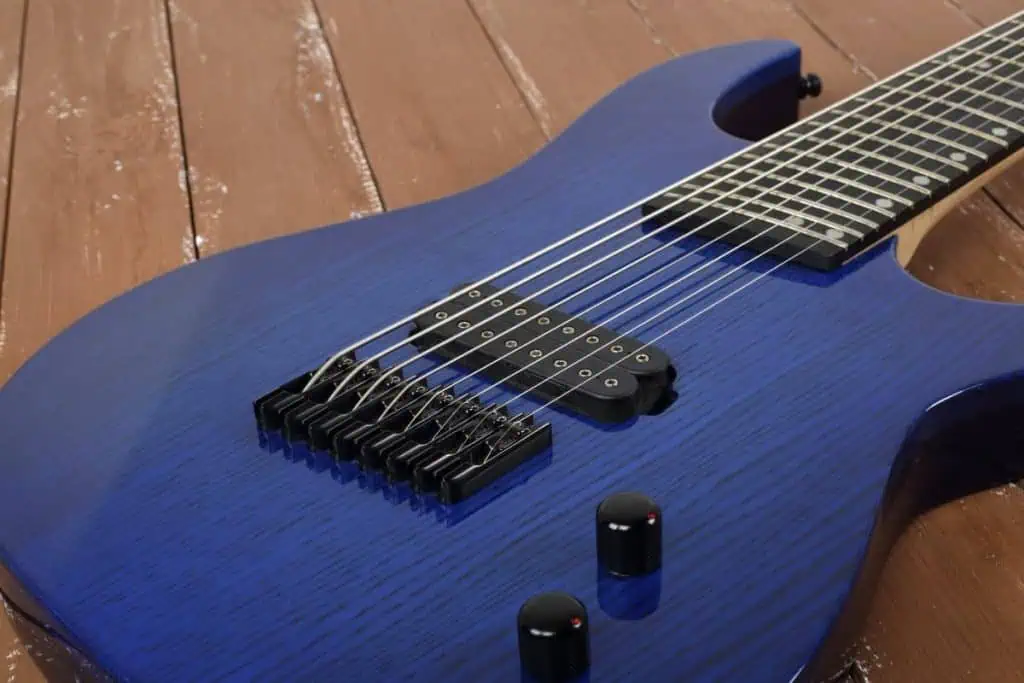
Additionally, the amount of money you have to invest in the maintenance of a single pickup guitar is much lower than what you have to invest in a multiple pickup guitar. Again, this is simply because there is less stuff to buy.
Buying one pickup instead of two or three is typically cheaper unless you compare something exquisitely high-end to an extremely budget-friendly option. You will also have to invest less in replacement wires, knobs, etc., for the same reason.
There are, of course, some super high-end single pickup guitars that cost an arm and a leg, but you don’t have to opt for those. Most of the time, it’s more affordable to go with a single pickup guitar.
3. They Encourage Creativity
Single pickup guitars might seem less sonically versatile because of the lower number of pickups. This is true to an extent, at least in the way most guitarists are used to playing — by relying on the tone and volume knobs to adjust the tone. The lack of that option on a single pickup guitar may seem like a limiting factor, but it is safe to say that it will encourage you to be creative in different ways.
Not being able to play around with the knobs will make you use your picking hand much more and in different ways than before to get the sound you want. This will force you to develop new techniques and playing methods to get the textures, timbre, and versatility you wish to achieve.
The lack of a neck pickup will also allow your hand to move freely and explore the parts of the guitar you haven’t explored so far, adding to the creativity. Many players are big fans of this and claim it provides a better playing experience. This is partly why single pickups are still quite popular despite the domination of guitars with two pickups.
Sometimes, you may accidentally hit one of your pickups with the pick. This can be extremely annoying and might force you to start recording again. That almost never happens with a single pickup guitar. There are fewer pickups to hit, which further increases the number of options you have when strumming.
So even though there are fewer options, this limitation will allow you to explore new things and become a more creative guitarist. You will still be able to produce a bunch of different sounds and create amazing music with just a little bit of effort.
4. They Make Less Noise
If a mechanism or a piece of gear is more complex, there are higher chances of something going wrong. In guitars, that means higher chances of interference and, thus, noise. On the other hand, a simpler guitar build means that there are fewer things to go wrong and start causing noise problems.
If you’re annoyed by random noise and buzzing, switching to a single pickup guitar can go a long way to help reduce interference and noise. This is not to say that two-pickup guitars and three-pickup guitars will necessarily cause problems; there’s just more to go wrong with them.
While you can offset noise and the annoying buzz from your guitar by making a Faraday cage for the pickups and circuitry, it’s best to avoid these problems altogether and play it safe by getting a single pickup guitar. The differences may not be perceptible in some cases, but a single pickup guitar is still a pretty safe bet.